Showing posts with label Jose Mourinho. Show all posts

Monday, October 10, 2011

Spain is more blaugrana and less madridista

This morning, any madridista who bought one of their favorite newspapers, Diario AS, found a surprising headline: "El Madrid se queda solo" (Madrid are left on their own). In the cover of the newspaper, they also inform that Real Madrid gets more rejection in San Mamés (Bilbao), Reyno de Navarra (Osasuna), Anoeta (San Sebastián) and the Calderón (Atlético Madrid) than in the Camp Nou (Barcelona). They also highlight that the antibarcelonism in Madrid is bigger than the antimadridism in Barcelona. Aside this focus on Real Madrid, AS also shows that Rayo is the most appreciated club in Spain, while Sevilla gets the biggest rejection, while Valencia, Villarreal, Málaga and Granada have a good image.

All these headlines are based on a survey done by the agency Ikerfel for AS among fans of the Primera División clubs. It is also important to put the results into a context. 8 years ago, a survey done by the Generalitat (Government of Catalonia) showed that Real Madrid enjoyed more sympathies than FC Barcelona with a huge margin of a 20%. The last survey of this kind was done by CIS (the institute of sociological studies of the Government of Spain) in the year 2007 and this margin of sympathies had been reduced to 7 points. Nowadays, even though the ones who pick Barcelona over Madrid as their main favorite club is just a 1% (which is irrelevant, considering the margin of error), the difference grows to a 7% in favor of the blaugranas when it comes to secondary sympathies.

Diario AS cover - Oct 10, 2011

The survey starts focusing on sympathies, asking for the favorite club and secondary sympathies. In this aspect, we already stated that Barcelona and Real Madrid show a similar amount of fans (18% and 17% respectively). Atlético Madrid (8%), Athletic (7%), Betis (7%) and Valencia (6%) get expected results, which do not differ much from the last survey done in 2007. Back then, Real Madrid got a 32.8%, Barcelona a 25.7%, Valencia a 5.3%, Athletic a 5.1%, Atlético a 4.3% and Betis 3.3%. It is important to highlight the differences: in this new survey, the sample was the Primera División clubs while, 4 years ago, this limit did not exist.

But even with these differences, probably the most relevant fact is the growing sympathies of Barcelona as secondary option for football fans. While Real Madrid used to be the second choice of the Spanish fans back then (with Barcelona very near them), this time Barcelona appears as second or third option for the 26% of the fans of the Primera División clubs, while Real Madrid's percentage fall to a 20%. These secondary option is what makes the difference.

Popularity index. As.com

But in football, aside the sympathies, the antipathies are usual too. There is a thin line between love and hatred and football could not be different. The bigger the club is the bigger the feelings around them are, in one way or another. The most admired clubs usually are the most hated and this is what the survey shows. Real Madrid is the most hated club by the 39% of Primera fans, while Barcelona gets the opposition of a 30%. If we add secondary hatred options (that is, eliminating local and direct rivalries), the percentage grows against Real Madrid. The 51% of the Primera División fans claim to be antimadridistas, while this percentage gets reduced to a 40% in the case of those who label themselves as antibarcelonistas. Sevilla's (30%) and Atlético's (29%) image isn't much better.

Unpopularity index. As.com

The following part of the analysis is based on the differences among the fans of the different clubs. Based on this, Real Madrid is chosen as the club with more sympathies in 7 different stadiums (not counting the local team, of course). Some of the results are expected, like the support among the Betis fans, since both clubs share recent legends like Gordillo, Poli Rincón or Alfonso; or Racing Santander, for similar reasons, after all Gento was born in a town near Santander and both clubs have been carrying a really good relationship through the years, which includes transfers in both directions, as it shows the cases of Munitis or Canales in recent years. Other results are expected for different reasons, Real Madrid also holds sympathies in clubs of the region, like Getafe or Rayo Vallecano, since these clubs are in the historical area of influence of Real Madrid. Probably, the most unexpected is the support of the sevillistas, but the noise created by the president Del Nido seems that did not hide the big madridismo of the city of Seville.

In the case of FC Barcelona the sympathies are also expected in some cases. Barcelona gets a clear support among Athletic, Real Sociedad or Osasuna, that is, the Basque provinces. Despite there are some historical rivalries, especially with Athletic, all these clubs have something in common, their capacity to be a channel for the national aspirations of the communities they are in. Despite the historical reasons of each nationalism is different, the national feeling, either Basque or Catalan, recognize each other's identity and both definitely share similar tools to reach similar goals. In the cases of Valencia and Mallorca, FC Barcelona may seen with good eyes due to cultural reasons, since there is a common culture among Catalans, Valencian and Mallorquin people, although there is also a good share of animadversion in these regions against the so-called pan-catalanism, which is shown in the results too. Aside the socio-political links, it was also to expect the pro-barcelonisme in Gijón. Sporting and Barcelona share lots of legendary players for both clubs in the last decades: Quini, Iván Iglesias, Abelardo, Luis Enrique and now David Villa. The case of Málaga may be temporary. It is true that Barcelona has a solid base in most of Spain, including Andalusia, but these results may show the late rivalry between Málaga and Real Madrid... or maybe between Pellegrini and Mourinho.


For - against by fans of each club. As.com

When it comes to hatred, the madridistas have it clear: they hate Barcelona with passion (97%). It is evident that the hatred goes both ways and something similar happens in Barcelona, but the results show that the antimadridismo in Barcelona is lower than the antibarcelonismo in Madrid. There is an interesting fact: Real Madrid gets more hatred among the Athletic, Real Sociedad, Osasuna and Atlético Madrid fans than among the Barça fans. In the case of the antimadridismo, there are evident cases, aside the mentioned in Barcelona. Real Madrid has been an eternal rival of clubs like Atlético Madrid or Athletic Club. The political factor has an effect in other cases, like Real Sociedad or Osasuna. But there is a growing antimadridismo in new areas. The most evident cases are: Valencia, Málaga and Sporting. Valencia used to have a really good relationship with Real Madrid, but in the late 90s, the way Real Madrid used to sign the star of Valencia, Pedja Mijatovic, broke this friendship. The cases of Málaga and Sporting probably have a lot to do with the recent events, especially with the arrival of Mourinho and his attacks on these clubs and their prestige and commitment.

In the case of the antipathies on Barcelona, aside the evident case of Real Madrid, it was easy to expect the case of Espanyol, given their centenary rivalry. Out of these evident cases, Barcelona does not enjoy the sympathies of fans of the zones of influence of the madridismo: Getafe, Rayo and Santander. Aside them, there are cases of classic antibarcelonismo in Granada, recently promoted, and the secondary antipathies that probably have something to do with political reasons, as in Seville (both clubs) and Valencia/Mallorca (where catalanism and anticatalanism is polarized).

Aside the two giants, the results show classic rivalries, mainly local or regional, like Betis-Sevilla, Athletic-Real Sociedad, Málaga-Sevilla, Valencia-Levante, Osasuna-Zaragoza; and new kind of rivalries, due to recent polemic events like Getafe-Racing (due to the Copa semifinal of a three years ago) or Mallorca-Villarreal (due to the elimination of Mallorca from the European competitions as a request of Villarreal for unpayments).

Relation sympathy/antipathy. As.com

Mixing all this information, the picture shows that Sevilla and Real Madrid get the worst love-hatred differencial, by an important margin, while Rayo Vallecano, Málaga, Valencia and Villarreal get the best image among the Primera División fans. How can we interpret all these information?

There are several factors that have an influence when it comes to understand this new scenario. Real Madrid have traditionally been the club of Spain and they always carried this flag with pride while their international success always backed this position. On the other hand, as we already mentioned in the entry about football and nationalism, clubs like FC Barcelona and Athletic Club have traditionally been seen as representatives of their national and identity aspirations.

But in recent times, FC Barcelona rose as new power in Spain and Europe with a very particular style. It is evident that success goes along admiration. The current admiration on Barcelona is based on their domestic and international triumphs and, as a consequence of it, they gather the support that the winners use to have. But there are other factors that help to understand this support beyond success. While the main reason of hatred of Barcelona has always been the catalanism of the club, the fans of every club of Spain recognize the essential importance of the Barcelona players in the success of the Spanish national team in the last years. Despite Barcelona never rejected the catalanism in all these years, the average fans found a link with players like Xavi, Iniesta, Puyol, Piqué or Villa, independently if they are Catalan or not. The Spanish NT is often seen as an extension of Barcelona, not just when it comes to players, but also in the style. At the same time, the new Board of Sandro Rosell has definitely lowered the political tensions inside the club, which were much more evident with Joan Laporta. The club remained catalanist but without the noise of the Laporta era.
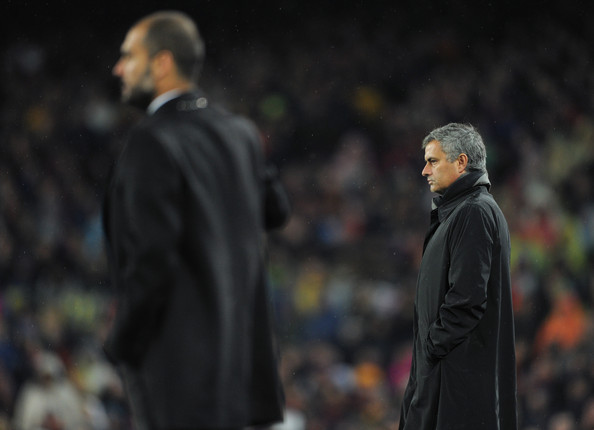
Pep Guardiola & José Mourinho

On the other hand, Real Madrid's prestige lost some points in the way. The lack of international and domestic success does not explain everything. Aside the lack of recent victories, the last decade had a negative effect on the perception of Real Madrid for several factors. First of all, the self-promotion of Real Madrid has been as profitable in terms of global marketing as damaging in terms of sympathies. The image of Real Madrid has been overexposed and, in some situations, has been seen as arrogant. The arrival of Florentino Pérez to Real Madrid was full of new messages, terms and symbolism. Florentino Pérez does not stop repeating that Real Madrid is the best club of the 20th century and, as evident as it is for most of the football fans, the constant bombing was often read as arrogant. In the same line goes messages as "this player was born to play in Real Madrid", often referring to players of a high level that seem to be designed for Real Madrid and not for anybody else. In the first stage of Florentino Pérez, the overdose of stars gave the team the initially positive and finally negative term of Galácticos. These Galácticos were a group of players that, in the right measure, won titles, but ended up seen as spoiled elitist stars without any kind of culture of effort. The overdose of Galácticos went along with the rise of Ronaldinho's Barcelona... a Ronaldinho who was labeled as too ugly to play in Real Madrid by Florentino Pérez. A joke that ended up being a nightmare for Real Madrid.

But the definitive impact has been the arrival of José Mourinho. The Portuguese coach has built big walls around Real Madrid in a prepared and constant propaganda in order to create tension in and out Real Madrid. This tension had the wished effects. While the messages got more tense, the union of the madridismo around the new project grew, but also the disaffection of the rest of the clubs. The internal message insists that the envy on the best club of the World is the reason of it, but this new slogan lose weight because of two reasons: Real Madrid never needed to repeat how good they are to be admired and, most importantly, it has been repeated in times of failures. This internal union is based in the constant search of enemies, some of them classic, but also some new. The press, the referees and even smaller rivals like Sporting or Málaga have been the victims of cheap attacks, like the one on Preciado doubting about the commitment of Sporting to beat Barcelona or the one on Pellegrini, when Mourinho claimed that he would not end up in a club like Málaga, suggesting the low level of the new club of his predecessor in the Bernabéu. To all these facts, the arrogant attitude of players like Cristiano Ronaldo, often victim of the booing in most of the stadiums of Spain, or Pepe, seen as a butcher, do not help much to the cause of the image. In fact, one could say that the level of tension created by a player, a manager or a president has a direct link with antipathies, and this is how the negative image of Sevilla is directly related with the noise and provocative attitude of their president, José María Del Nido.
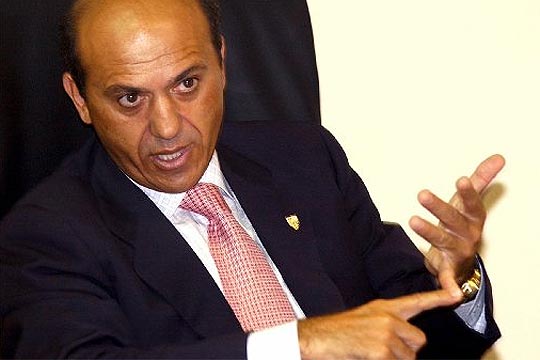
José María Del Nido, Sevilla president


Surprisingly, all these events ended up moving the roots of support on the two giants. Barcelona gets the respect and the sypathies left by Real Madrid in their new policies. The success of Barcelona and/or the Spanish NT, the soft-catalanism, the arrogant Florentinismo and the policies of tension of Mourinho made Spain more barcelonista and less madridista. As weird as it sounds.

Thursday, August 18, 2011

Supercopa: Chapter II


The final chapter of the Supercopa was a memorable game, just as it was the first. As it happened in the Bernabéu, the Camp Nou got dressed as in the important occasions. The match really deserved it. It is just my personal opinion, but nowadays a Barcelona-Real Madrid is the best football game you can watch and it is really difficult to find a similar collection of stars on the pitch. The precedents, the quality of the players, the necessity of beating the eternal rival, all the ingredients suggested that something incredible was about to happen.

The match was unforgettable. The proposal of Real Madrid was brave, at the level of the size of the name and the shirt of this club. But Barcelona also made a step forward after the bad image shown in Madrid. The game was the kind of match that the fans love and the coaches hate. No one really had the game under control in any moment of the 90 minutes. Sometimes the teams lacked the required precision, but despite this fact, both teams made a tribute to football, in a majestic demonstration of quality, effort and skills.


The game was overall balanced, but Real Madrid looked better once more. The pressure, the verticality, the quality of this team seemed endless at moments. And Barcelona responded with heart, attitude and the infinite individual quality of some of their players, essentially Lionel Messi. The Argentinian is the key to understand the outcome of this trophy. Real Madrid have very good reasons to feel frustrated, since they were the best team in most of the 180 minutes of this Supercopa, but they did not find the formula to stop Messi, who led his team to the victory with 2 goals and 1 memorable assist. If we saw a big Real Madrid, we also saw a giant Lionel Messi.

The feeling is that we are going to start a historical season, with two super-teams who will give everything to defeat the rival. The level of competitiveness and tension is so high that there is no room for mercy. There never was, but this time it looks like Barcelona and Madrid are further than ever in history. They feel and probably are the 2 best teams of the World and this Earth is too small for both.


Things can change in two days and, maybe, Real Madrid will find the way to stop Messi soon. They look closer or, as close as they were in the run of tight Clásicos last season. But this time it was very frustrating, because Real Madrid did everything they had to do to win both games, unlike it happened last year, when the madridistas accepted a minor team role. Real Madrid demonstrated they can play face to face against Barcelona. The difference are details. 

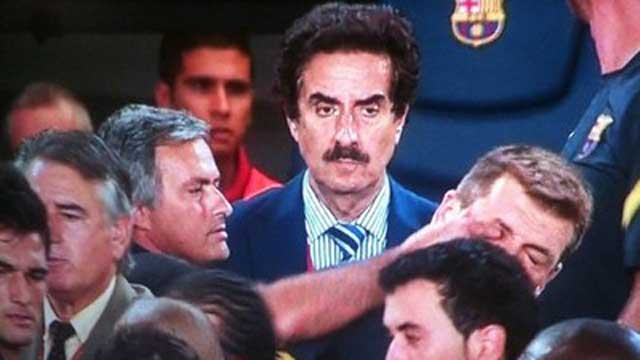
And this is why it is necessary to talk about Jose Mourinho. These Clásicos were already hot behind him, but the outcome of these games are reaching unknown limits. The fights, the press conferences of insults, the fingers in some else's eye, the lack of class of the team disappearing from the pitch when Barcelona was going to get the trophy. It is an unnecessary stain in a sublime game. For Barcelona, the sweetest Supercopa, the first time they win this trophy against Real Madrid, while Pep Guardiola matches the record of Johan Cruyff. A promising season is waiting for us.


Tuesday, August 16, 2011

Supercopa - Chapter I

100 days after the hot run of Clásicos last season, Real Madrid and Barcelona met last Sunday in the Supercopa. Even though a Clásico is always a very important game, from the comments from both sides, it was evident that this is the least important trophy of the season. José Mourinho defined the trophy as the least important of the season, but the most important of the summer. Pep Guardiola announced that his team was short in the preparation, but stating that this fact would never be an excuse and highlighting that the best team will win the trophy. With these precedents, the game was about to start.

But, despite the final outcome of the trophy will not be useful to take conclusions, no one wants to lose against the eternal rival. In fact, the Santiago Bernabéu showed a fantastic image, packed, full of flags and the lungs of the madridismo working at full use since the doors of the stadium opened. José Mourinho presented the model lineup of the previous season, the same lineup that got trashed in the Camp Nou 5-0 last year, forgetting the experiments of the run of Clásicos last year. On the other hand, Pep Guardiola had to do lots of changes in the initial formation of the team. With Puyol still injured and Piqué not in his best conditions, Barcelona did not have any specific central back to face the most effective attacking line of the World. Aside the problems in defense, the main concern was in a midfield that did not have the compass of the team, Xavi Hernández, nor the man that holds the system of the team, Sergio Busquets. Instead, he gave Thiago Alcántara his first chance in a big game and tested Keita as anchor man.


Since the first second of the game, it was evident that Mourinho and his team had forgotten the mean image shown last Spring. Instead of assuming the minor team role, the madridistas wanted to impose their football and their image could not have been better. Real Madrid pressured all over the field, making impossible for Barcelona to connect 3 passes in a row. When the merengues had the ball, their blizkrieg attacks were unstoppable for a shaky Barcelona. Real Madrid only needed 3 passes to put the ball in the danger zone, where the dinamic Benzema and Özil were extremely dangerous. The first dangerous action was a fantastic header by Karim Benzema, which was not a goal because Victor Valdés flew where not many goalkeepers can. But it was evident that Barcelona could not resist that pressure much and a direct ball to the right flank of Real Madrid's attack was taken by Benzema, who toyed with his fellow countryman Eric Abidal and took advantage of the late help of Mascherano to pass the ball between the legs of the Argentinian for Mesut Özil, who executed without mercy. The celebration of the goal said it all, a 90% for Benzema and 10% for the German.

Barcelona was desperate and, given the situation, Guardiola betrayed one of his untouchable commandments. He asked his goalie and defensive line to kick long balls to avoid the pressure of Real Madrid in order to stop losing constant risky balls in dangerous zones. The result was a very strange situation: the ball possession of Real Madrid was higher than Barcelona's. Who would have thought? The defense of Barcelona was shaky, Thiago and Keita were out of the game and Iniesta could not create by himself. The forwards spent more time helping in defense than attacking the rival. The aggressive pressure of Real Madrid was working, despite the tackles of Alonso and, especially, Khedira were sometimes in the border of the rules.

Within the minutes, Real Madrid lowered the level of pressure (it was impossible to keep that rythm for so much time), Ronaldo got lost in individualistic actions, Özil started to disappear from moments and only Benzema kept being a constant danger. But, in one way or another, the game had only one owner: Real Madrid. The relief was not enough for a mediocre Barcelona, who just offered a high dose of attitude to stop Real Madrid.


And, probably the first time Barcelona crossed the midfield in a creative action, the ball ended up in Messi's feet, who attracted several defenders around him. The Argentinian opened the ball to his left flank, where David Villa faced Sergio Ramos. Even though we all saw that action from Villa one million times already, he did it again. Villa cut in and shot the ball to the long post. A piece of art. A fantastic goal that could not have been more unfair, given the game we were all watching. After 35 minutes, it was the first shot of Barcelona... and the result was 1-1. The Bernabeu got quiet, surprised by the tie... and, when the game was about to reach the half time, in a lost and strange action, Leo Messi could escape from several rivals, with a mix of talent and luck, to face Iker Casillas. The Argentinian did not forgive: 1-2. Two shots, two goals. Unbelivable for madridistas and barcelonistas.

The half time was not a solution for a shocked Real Madrid. Quite the opposite, Barcelona enjoyed their best minutes at the beginning of the second half. With more spaces, Thiago started to appear and connect with Iniesta, Alexis started to win all the battles against Marcelo and the 3rd goal of Barcelona was closer than ever. But somehow Barcelona got paid with the same bill. When Madrid was struggling to play their football, a messy action in Barcelona's box after a set piece ended up in Alonso's feet. The Basque midfielder used precision over power and kicked the ball through a forest of legs of Barcelona players. When Valdés saw the ball, it was already in. 2-2 and 35 minutes to play.

Guardiola risked Xavi and Piqué to give the team more stability. On the other hand, the goal of Real Madrid was an impulse for the home team, but the efforts of the madridistas were unefficient, sometimes due to the lack of precision in attack, sometimes due to excessive individualism. A tired Barcelona, without lungs and legs to attack, chose to keep more ball possession to let the minutes pass. The last minutes of the game was a kind of revival of what we saw last year. Possible penalties here and there, Pepe and Alves in their own roles, fights, constant fouls and protests.


The madridismo will probably regret the result, since they were superior, especially in the first half. If they want to see the positive side, they already know that it is very difficult not to succeed next time in similar circumstances. If they want to be negative, they will wonder what they have to do to defeat Barcelona, since it was an impossible task, even in their best day. The barcelonistes have reasons to be worried, the lack of preparation was evident, a big dose of luck (or efficiency) may be enough once against Real Madrid, but they will have to show much more if they want to defeat their rival for the first time in the Supercopa. But, at the same time, the culés must be proud of their attitude and competitiveness, which were high enough to achieve a really good result in the Bernabéu... once more.

The 2-2 gives Barcelona the favorite condition. Real Madrid knows that they will probably have to win in the Camp Nou, if they want to achieve this title. But, looking at the first game, it does not look impossible. A great game in front of us: Chapter II, tomorrow night.

Thursday, July 28, 2011

Mourinho always wins titles in his 2nd year

"The top of my teams always came in the second season" (link in Spanish). It was August 2010, José Mourinho had just started his first pre-season with Real Madrid, after winning the UEFA Champions League with Inter against Bayern in the Santiago Bernabéu. At that time, the madridismo still felt relief after the defeat of Barcelona in the semifinals of the competition, when Inter denied the "obsession" of the barcelonisme, and the arrival of the prestigious Portuguese coach, so hated in Can Barça after the endless polemics during the last decade, was the one of a Messiah. Still Mourinho knew the size of the challenge he had in front of him and asked for patience. A well thought and rational message. After all, Real Madrid had been swallowing coaches and he knew that stability is necessary to build a serious project. As Mourinho said, the automatism and mechanism in a football team does not appear from one day to the next.

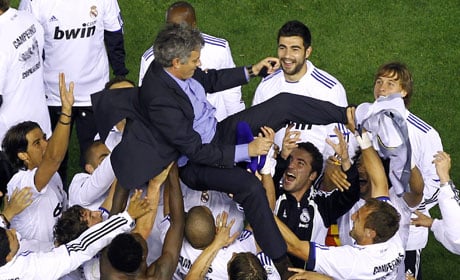
One year later, Real Madrid already won a title, the Copa del Rey, defeating Barcelona. In the overall analysis of the season, it is evident that the winner of the biggest rivalry of the World was Barcelona, after winning La Liga (including the historical 5-0 in a face to face) and the Champions League. In any case, this title was very sweet since it was against the main rival and it looked like a step forward in the good direction and many were ready to remember how Johan Cruyff saved his head in a Copa del Rey final in 1990 to win an European Cup and 4 Liga titles in a row. Real Madrid lost the war, but the feeling in the club of the capital of Spain is that they are closer and the best is yet to come. Mourinho promised them to have the winning team in the 2nd year.


And here we are. The second season is about to start. It is the time and the moment and Mourinho is a prisoner of his own words for the good and the bad. This time a Copa del Rey will not be enough, so La Liga and/or the Champions League is a necessity. If Mourinho is able to do it, he will be raised to the heavens. A man of word. But if not, everything will turn against him.

Last year, La Liga lived moments of tension that did not have any precedent. José Mourinho declared the war in every single level. As himself declared, the games start in the conference press and he did it. He knew how the state of tension made Barcelona face the semifinals against Inter from a passionate point of view instead of focusing in football. Mourinho's strategy was to create a total state of tension since the very first day. Every tool in his hand was a weapon of massive destruction. One day it was a lineup of Manuel Preciado (Sporting's coach); the next day, the fixtures set by LFP; then, the referees; or the theatrics of the rivals. The most radical sector of the pro-madridista media did not hesitate to act as megaphone or even directly in the attacks, as the day the conservative radio station COPE claimed that official Real Madrid sources were going to ask the RFEF (Spanish FA) to start more serious anti-doping controls and somehow the names of Valencia and, especially, Barcelona were suggested. Both clubs made official communications and asked for a fast and evident rectification, the radio station apologized since they could not show any evidence, but they still claimed that the news were real. Despite the name of Real Madrid was involved as accusing part in the news, the club did not make any public communication and the only reply was a heavy silence. The run of Clásicos at the end of the season only left more corpses on the field and even the consequences of these games in the personal relationships of the players who share locker room in the Spanish NT were feared.

We had a couple of months of peace, but everything is fresh in the memory of everyone. In a matter of two weeks, Barcelona and Real Madrid are going to clash in the Supercopa again. A minor trophy with a special interest. It is José Mourinho's first chance to finish with the domination of Barcelona. A minor battle that will never be determinant to decide the winner of the season, but Mourinho knows that the title would help him and his players to trust in the "2nd year" message. In Barcelona, it is also known that it will be good for them to create doubts in the still solid message of the Portuguese coach.


The season about to start is going to be definitive for Mourinho. He is the prisoner of his own words and this time the absurd polemics will not make sense unless they are backed with important titles. I find hard to believe that the Bernabéu could actually tolerate another year of total war, if Mourinho is not able to take them to Cibeles to celebrate important titles.

Mourinho does not seem to hide behind noise. He has all the players he wanted (Agüero or Neymar fit in Florentino's style, but they are not essential in his project, as he has declared), the most expensive team in history. He has the total control of the club, being able to erase Jorge Valdano from the structure, becoming the only owner of the whole scenario. What is normal in England, it is a rarity in Spain and, especially, in Florentino Pérez's Real Madrid. If someone with the power and ego of the president of Real Madrid has been able to give the club to José Mourinho, the only possible interpretation is that the Portguese coach is the only bet. Florentino Pérez has put his own future in the hands of the coach.

"End of cycle" is the motto. Real Madrid have a super-team this year. If last year they were amazing, the depth of the current squad is unseen. It is hard to believe that Mourinho will change his style. Another year of tension is to come, but this time the noise must be useful or Mourinho will be the first victim of it. Now there is no disadvantage in terms of preparation and the noise will not hide any reality. Mourinho knows it. Everyone knows it. It is now or never for him... and for Florentino Pérez.