Showing posts with label Florentino Pérez. Show all posts

Monday, October 10, 2011

Spain is more blaugrana and less madridista

This morning, any madridista who bought one of their favorite newspapers, Diario AS, found a surprising headline: "El Madrid se queda solo" (Madrid are left on their own). In the cover of the newspaper, they also inform that Real Madrid gets more rejection in San Mamés (Bilbao), Reyno de Navarra (Osasuna), Anoeta (San Sebastián) and the Calderón (Atlético Madrid) than in the Camp Nou (Barcelona). They also highlight that the antibarcelonism in Madrid is bigger than the antimadridism in Barcelona. Aside this focus on Real Madrid, AS also shows that Rayo is the most appreciated club in Spain, while Sevilla gets the biggest rejection, while Valencia, Villarreal, Málaga and Granada have a good image.

All these headlines are based on a survey done by the agency Ikerfel for AS among fans of the Primera División clubs. It is also important to put the results into a context. 8 years ago, a survey done by the Generalitat (Government of Catalonia) showed that Real Madrid enjoyed more sympathies than FC Barcelona with a huge margin of a 20%. The last survey of this kind was done by CIS (the institute of sociological studies of the Government of Spain) in the year 2007 and this margin of sympathies had been reduced to 7 points. Nowadays, even though the ones who pick Barcelona over Madrid as their main favorite club is just a 1% (which is irrelevant, considering the margin of error), the difference grows to a 7% in favor of the blaugranas when it comes to secondary sympathies.

Diario AS cover - Oct 10, 2011

The survey starts focusing on sympathies, asking for the favorite club and secondary sympathies. In this aspect, we already stated that Barcelona and Real Madrid show a similar amount of fans (18% and 17% respectively). Atlético Madrid (8%), Athletic (7%), Betis (7%) and Valencia (6%) get expected results, which do not differ much from the last survey done in 2007. Back then, Real Madrid got a 32.8%, Barcelona a 25.7%, Valencia a 5.3%, Athletic a 5.1%, Atlético a 4.3% and Betis 3.3%. It is important to highlight the differences: in this new survey, the sample was the Primera División clubs while, 4 years ago, this limit did not exist.

But even with these differences, probably the most relevant fact is the growing sympathies of Barcelona as secondary option for football fans. While Real Madrid used to be the second choice of the Spanish fans back then (with Barcelona very near them), this time Barcelona appears as second or third option for the 26% of the fans of the Primera División clubs, while Real Madrid's percentage fall to a 20%. These secondary option is what makes the difference.

Popularity index. As.com

But in football, aside the sympathies, the antipathies are usual too. There is a thin line between love and hatred and football could not be different. The bigger the club is the bigger the feelings around them are, in one way or another. The most admired clubs usually are the most hated and this is what the survey shows. Real Madrid is the most hated club by the 39% of Primera fans, while Barcelona gets the opposition of a 30%. If we add secondary hatred options (that is, eliminating local and direct rivalries), the percentage grows against Real Madrid. The 51% of the Primera División fans claim to be antimadridistas, while this percentage gets reduced to a 40% in the case of those who label themselves as antibarcelonistas. Sevilla's (30%) and Atlético's (29%) image isn't much better.

Unpopularity index. As.com

The following part of the analysis is based on the differences among the fans of the different clubs. Based on this, Real Madrid is chosen as the club with more sympathies in 7 different stadiums (not counting the local team, of course). Some of the results are expected, like the support among the Betis fans, since both clubs share recent legends like Gordillo, Poli Rincón or Alfonso; or Racing Santander, for similar reasons, after all Gento was born in a town near Santander and both clubs have been carrying a really good relationship through the years, which includes transfers in both directions, as it shows the cases of Munitis or Canales in recent years. Other results are expected for different reasons, Real Madrid also holds sympathies in clubs of the region, like Getafe or Rayo Vallecano, since these clubs are in the historical area of influence of Real Madrid. Probably, the most unexpected is the support of the sevillistas, but the noise created by the president Del Nido seems that did not hide the big madridismo of the city of Seville.

In the case of FC Barcelona the sympathies are also expected in some cases. Barcelona gets a clear support among Athletic, Real Sociedad or Osasuna, that is, the Basque provinces. Despite there are some historical rivalries, especially with Athletic, all these clubs have something in common, their capacity to be a channel for the national aspirations of the communities they are in. Despite the historical reasons of each nationalism is different, the national feeling, either Basque or Catalan, recognize each other's identity and both definitely share similar tools to reach similar goals. In the cases of Valencia and Mallorca, FC Barcelona may seen with good eyes due to cultural reasons, since there is a common culture among Catalans, Valencian and Mallorquin people, although there is also a good share of animadversion in these regions against the so-called pan-catalanism, which is shown in the results too. Aside the socio-political links, it was also to expect the pro-barcelonisme in Gijón. Sporting and Barcelona share lots of legendary players for both clubs in the last decades: Quini, Iván Iglesias, Abelardo, Luis Enrique and now David Villa. The case of Málaga may be temporary. It is true that Barcelona has a solid base in most of Spain, including Andalusia, but these results may show the late rivalry between Málaga and Real Madrid... or maybe between Pellegrini and Mourinho.


For - against by fans of each club. As.com

When it comes to hatred, the madridistas have it clear: they hate Barcelona with passion (97%). It is evident that the hatred goes both ways and something similar happens in Barcelona, but the results show that the antimadridismo in Barcelona is lower than the antibarcelonismo in Madrid. There is an interesting fact: Real Madrid gets more hatred among the Athletic, Real Sociedad, Osasuna and Atlético Madrid fans than among the Barça fans. In the case of the antimadridismo, there are evident cases, aside the mentioned in Barcelona. Real Madrid has been an eternal rival of clubs like Atlético Madrid or Athletic Club. The political factor has an effect in other cases, like Real Sociedad or Osasuna. But there is a growing antimadridismo in new areas. The most evident cases are: Valencia, Málaga and Sporting. Valencia used to have a really good relationship with Real Madrid, but in the late 90s, the way Real Madrid used to sign the star of Valencia, Pedja Mijatovic, broke this friendship. The cases of Málaga and Sporting probably have a lot to do with the recent events, especially with the arrival of Mourinho and his attacks on these clubs and their prestige and commitment.

In the case of the antipathies on Barcelona, aside the evident case of Real Madrid, it was easy to expect the case of Espanyol, given their centenary rivalry. Out of these evident cases, Barcelona does not enjoy the sympathies of fans of the zones of influence of the madridismo: Getafe, Rayo and Santander. Aside them, there are cases of classic antibarcelonismo in Granada, recently promoted, and the secondary antipathies that probably have something to do with political reasons, as in Seville (both clubs) and Valencia/Mallorca (where catalanism and anticatalanism is polarized).

Aside the two giants, the results show classic rivalries, mainly local or regional, like Betis-Sevilla, Athletic-Real Sociedad, Málaga-Sevilla, Valencia-Levante, Osasuna-Zaragoza; and new kind of rivalries, due to recent polemic events like Getafe-Racing (due to the Copa semifinal of a three years ago) or Mallorca-Villarreal (due to the elimination of Mallorca from the European competitions as a request of Villarreal for unpayments).

Relation sympathy/antipathy. As.com

Mixing all this information, the picture shows that Sevilla and Real Madrid get the worst love-hatred differencial, by an important margin, while Rayo Vallecano, Málaga, Valencia and Villarreal get the best image among the Primera División fans. How can we interpret all these information?

There are several factors that have an influence when it comes to understand this new scenario. Real Madrid have traditionally been the club of Spain and they always carried this flag with pride while their international success always backed this position. On the other hand, as we already mentioned in the entry about football and nationalism, clubs like FC Barcelona and Athletic Club have traditionally been seen as representatives of their national and identity aspirations.

But in recent times, FC Barcelona rose as new power in Spain and Europe with a very particular style. It is evident that success goes along admiration. The current admiration on Barcelona is based on their domestic and international triumphs and, as a consequence of it, they gather the support that the winners use to have. But there are other factors that help to understand this support beyond success. While the main reason of hatred of Barcelona has always been the catalanism of the club, the fans of every club of Spain recognize the essential importance of the Barcelona players in the success of the Spanish national team in the last years. Despite Barcelona never rejected the catalanism in all these years, the average fans found a link with players like Xavi, Iniesta, Puyol, Piqué or Villa, independently if they are Catalan or not. The Spanish NT is often seen as an extension of Barcelona, not just when it comes to players, but also in the style. At the same time, the new Board of Sandro Rosell has definitely lowered the political tensions inside the club, which were much more evident with Joan Laporta. The club remained catalanist but without the noise of the Laporta era.
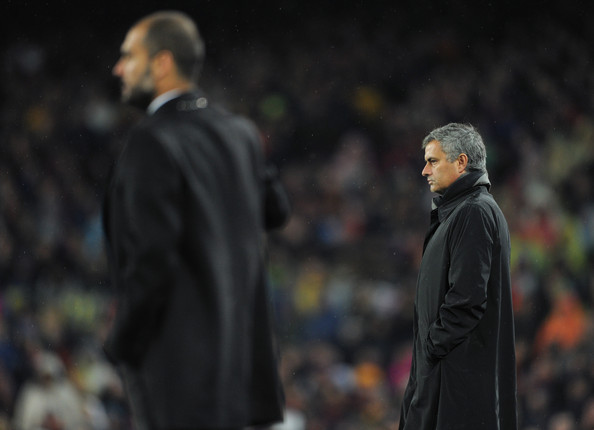
Pep Guardiola & José Mourinho

On the other hand, Real Madrid's prestige lost some points in the way. The lack of international and domestic success does not explain everything. Aside the lack of recent victories, the last decade had a negative effect on the perception of Real Madrid for several factors. First of all, the self-promotion of Real Madrid has been as profitable in terms of global marketing as damaging in terms of sympathies. The image of Real Madrid has been overexposed and, in some situations, has been seen as arrogant. The arrival of Florentino Pérez to Real Madrid was full of new messages, terms and symbolism. Florentino Pérez does not stop repeating that Real Madrid is the best club of the 20th century and, as evident as it is for most of the football fans, the constant bombing was often read as arrogant. In the same line goes messages as "this player was born to play in Real Madrid", often referring to players of a high level that seem to be designed for Real Madrid and not for anybody else. In the first stage of Florentino Pérez, the overdose of stars gave the team the initially positive and finally negative term of Galácticos. These Galácticos were a group of players that, in the right measure, won titles, but ended up seen as spoiled elitist stars without any kind of culture of effort. The overdose of Galácticos went along with the rise of Ronaldinho's Barcelona... a Ronaldinho who was labeled as too ugly to play in Real Madrid by Florentino Pérez. A joke that ended up being a nightmare for Real Madrid.

But the definitive impact has been the arrival of José Mourinho. The Portuguese coach has built big walls around Real Madrid in a prepared and constant propaganda in order to create tension in and out Real Madrid. This tension had the wished effects. While the messages got more tense, the union of the madridismo around the new project grew, but also the disaffection of the rest of the clubs. The internal message insists that the envy on the best club of the World is the reason of it, but this new slogan lose weight because of two reasons: Real Madrid never needed to repeat how good they are to be admired and, most importantly, it has been repeated in times of failures. This internal union is based in the constant search of enemies, some of them classic, but also some new. The press, the referees and even smaller rivals like Sporting or Málaga have been the victims of cheap attacks, like the one on Preciado doubting about the commitment of Sporting to beat Barcelona or the one on Pellegrini, when Mourinho claimed that he would not end up in a club like Málaga, suggesting the low level of the new club of his predecessor in the Bernabéu. To all these facts, the arrogant attitude of players like Cristiano Ronaldo, often victim of the booing in most of the stadiums of Spain, or Pepe, seen as a butcher, do not help much to the cause of the image. In fact, one could say that the level of tension created by a player, a manager or a president has a direct link with antipathies, and this is how the negative image of Sevilla is directly related with the noise and provocative attitude of their president, José María Del Nido.
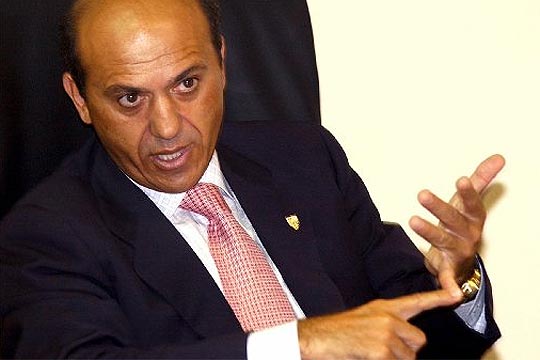
José María Del Nido, Sevilla president


Surprisingly, all these events ended up moving the roots of support on the two giants. Barcelona gets the respect and the sypathies left by Real Madrid in their new policies. The success of Barcelona and/or the Spanish NT, the soft-catalanism, the arrogant Florentinismo and the policies of tension of Mourinho made Spain more barcelonista and less madridista. As weird as it sounds.

Sunday, September 25, 2011

The Assemblies of FC Barcelona and Real Madrid: Flock of Sheep

This weekend, the Assemblies of socios of FC Barcelona and Real Madrid CF had their ordinary annual meeting. In each case, some important social or economic issues, which have a direct effect on the future of these clubs, were on the table. But it was also interesting to listen to the messages of the presidents of the two most important clubs of Spain, if not the World nowadays.

In the case of FC Barcelona, there were two major issues on the table: the sponsorship of Qatar Foundation and the approval of the new young stand, Fanàtics. The controversial sponsorship of Qatar Foundation has been under discussion in the blaugrana atmosphere since it was announced. The deal with the Qatari foundation is the most important in the World of football nowadays. The sponsorship started last year when Barcelona already received 15 million euros and now the socis had to decide to extend the 171 million euros deal until the year 2016. Several social platforms questioned this agreement, given the origin of this money. Qatar is an Arab emirate that is questioned by the situation of the women, the homosexuals, the rights of foreign workers or the religious freedom. The anti-Qatar platform asked for the "no" for the sponsorship based on the lack of respect on human rights in the Emirate. However, it was remarkable the strong support of Pep Guardiola on Qatar: "Qatar is the most open and democratic Islamic country that is willing to open themselves to the Western World, where the most established democracies are". Probably, someone should tell Pep Guardiola about the existence of countries like Turkey, for example, but aside this aspect, it is evident that some of the things that happen in Qatar would never be accepted in the Catalan society. Probably, it is also important to know that each country must make their own process towards freedom and democracy, which is not the perfect system, but probably the best humanity has ever found, and never forget the own particular sins of the Western society, but in one way or another, all this defense of Qatar was as excessive as ridiculous.


The reality about the sponsorship of Qatar Foundation is way more simple: money. The club consider that is necessary to generate money to keep the club on top and the Board put all the marketing and media resources to defend their position. Qatar Foundation offered the highest amount of money. As I said, it is ridiculous and excessive to claim that Qatar is what is not. It is a fact that Qatar does not respect elemental human rights, just as Nike or Adidas set factories in states where the labor norms are minimum and hire minors to elaborate the expensive sport clothes we wear in the Western World, or just as other clubs wear sponsors that set their base in tax havens, promoting harmful activities like gambling. Things must be put in the right terms: it is all about the money in a very competitive environment, so probably the discussion goes beyond Barcelona or football itself: it is the whole economic system what is under question. But things must be called by their own name. In that sense, the big majority of the socis decided to vote for the sponsorship deal with Qatar, accepting the money while looking at somewhere else and closing their nose. As sad as it sounds.

The other important issue of the blaugrana Assembly was the approval of the "youth stands" called Fanàtics. It was evident since long ago that the Camp Nou's atmosphere was like the opera. The high prices and the difficulties to have access to season tickets have as a consequence to have usual attendances of people that are not particularly young, but usual cigar smoker fans (by the way, smoking in the Camp Nou has been forbidden in this Assembly too) who did not create a noisy atmosphere to support the team. The project aim to attract 14,000 young socis to the Camp Nou in order to create a more noisy and spectacular atmosphere in the stadium.


But a report of the Catalan police denounced the existence of former members of the ultra group Boixos Nois and people with penal antecedents in the initial list. Back in 2003, the president Joan Laporta took an important and brave decision in the Spanish football, kicking out the ultras from the Camp Nou. Important, since it was an example in La Liga, assuring that the Camp Nou would be a place for the families and not for the violent people. Brave, since he put in danger his own life and the life of his family and it is important to recall that there was a conspiracy of members of Boixos Nois and security members of the club itself to threaten his life, which ended up with these radicals in jail. Now, the disgusting shadow of the Boixos Nois was flying over the Camp Nou.

The club assure that the violent ultras will not be back in the stadium. Given the polemics in the press, the club approved the new young sector in the stadium, but it does not have an initial date to be implemented, since they want to guarantee the security and expect the approval of the police. In one way or another, the club should have put more effort in this task, since nearly 200 people of the initial list had been involved in violent issues and the club should know their names at this point. The barcelonisme must keep an eye on this particular issue. The idea is good, but the club must be careful with these issues, since the violent ultras should never be accepted in the stadium.


In the Assembly of Real Madrid, the most important institutional aspect, aside the approval of the budgets, was the renewal project of the Santiago Bernabéu stadium. As we presented in a past entry, not knowing the final aspect of the project, Florentino Pérez is working to assure the economic and financial future of the club. As always in the past, from the construction of the O'Donnell stadium by the own socios of the club in the year 1912 to the initial project of the Nuevo Chamartín stadium back in the 1940s, the home of Real Madrid has always played a very important role to assure the future of the institution and, this time, it could not be different. The revolutionary project gather the construction of a mall and a hotel within a new and spectacular cover for the stadium. The initial budget assures a cost of 120 million euros in the construction, but also incomes of 200 million euros per year. This ambitious project will definitely change the shape of one of the symbols of the club.

But, at the same time, it was also important to pay attention to some messages from the presidency of the club. In this sense, there will be several interpretation about these words, but the president made a clear and strong defense of the controversial coach José Mourinho. If the club had supported their coach in several occasions, today the president of Real Madrid gave the words of their coach the level of institutional policy. It is clear that, at this point, the coach has a strong position among the madridismo, despite (or maybe thanks to) the external criticism. In the own words of the president Florentino Pérez: "We believe in this team and in the best coach of the World: José Mourinho. [...] The experience of the previous season showed the necessity of reform in the club: to give more autonomy to the figure of the coach and to add more competences to his position in the club as a sport manager that will only depend on José Ángel Sánchez (general director)". It was already clear that Florentino Pérez had given José Mourinho full powers in the sport level and gave him the head of Jorge Valdano, known for having personal issues with the coach and a different (and moderate) approach to the events of football.


At the same time, the president Pérez added: "Two seasons ago, we were not a seeded team in the Champions League and last year we reached the semifinals.  The search of the victory is one of the identity signals and we want to make the dream of the Décima (10th Champions League title) soon. Last year, if we lost the Champions League, it was not our fault". Probably, there are many ways to understand this last statement, but it suggests the approval of one of the strongest messages of José Mourinho: an external more or less recognizable enemy that prevented the triumph of Real Madrid in the semifinals of the Champions League. In a first thought, someone could say that the red card for Pepe was a fair or unfair advantage for Barcelona, but definitely the absence of the red card would not have assured an automatic pass to the final for Real Madrid, since the game was 0-0 and there was a second leg to be played in Barcelona too. As Mourinho suggested in the press conference after the match, it could be Unicef, Villar or UEFA, but there was a boycott on Real Madrid to avoid their presence in the final of Wembley. With these words, Florentino Pérez takes the words out of the conference press to make it official policy of Real Madrid with all its consequences. The club has adopted the criticism on the referees and the football institution as part of the values, as it also was suggested by the president Pérez not so long ago: "The nobility (señorío) of Real Madrid is to defend the club and Mourinho does it". Definitely, the president Pérez has done a good work adapting the traditional values to the club to a new context, even if this change is a contradiction by itself. If señorío means elegance, education and behavior as quality of a noble sir, it does not look like José Mourinho and its flaming messages fit very well in the definition.

As conclussion, in both cases, the Assemblies of Barcelona and Real Madrid acted as usual, like a flock of sheep. The blaugranas got carried by the message of fear sent by Rossell's terror campaign of losing territory against the rivals, throwing the clean shirt (or Unicef shirt) and the defense of democracy and freedom to the garbage for lots of Qatari millions. And in the club of Chamartín, the president and the socios of Real Madrid sold their soul to the devil José Mourinho, considering that he is the only one that can finish with the dominance of Guardiola's Barcelona on the pitch. In this case, the madridistas threw their señorío to the garbage (whatever the new marketing message says) and accepted that the end justify the means. In both cases, a flock of sheep.

Tuesday, September 6, 2011

The dream of Santiago Bernabéu: Nuevo Chamartín

Back in 1947, when the Nuevo Chamartín (nowadays, called Estadio Santiago Bernabéu) opened its doors for the first time, Real Madrid was already a powerful club, but not the club with more titles. Real Madrid had achieved 2 Ligas in the times of the II República in the 1930s and 8 Copas, while Athletic has won 5 Ligas and 17 Copas, being the most important club until this date. The importance of the Nuevo Chamartín in the future victories and current status of Real Madrid is enormous and everything was a dream of their legendary and visionary president Santiago Bernabéu.

Santiago Bernabéu was born in Almansa (Albacete) in 1895 and grew up in a middle-class family. Being five years old, his family moved to Madrid. His first team was Real Gimnástica de Madrid, an already disappeared football club of the capital of Spain, where he started to play as forward, but he moved to Madrid CF (without the Real title yet) soon, the team of his brother Antonio, one of the founder members of the club. After three years in the youth system, he made his debut in the first team in 1913, being 18 years old. Santiago Bernabéu played for Real Madrid until 1927, scoring 69 goals in 78 games.

After his retirement, Santiago Bernabéu started to study law, but he never worked as lawyer, since he preferred to work in different positions inside the club, starting as part of the technical staff to end up as Secretary of the Board of the club from 1929 to 1935, when he resigned for his opposition to the new president Rafael Sánchez Guerra, although he stayed as member of the Board. Since the times of the II República, Santiago Bernabéu had shown his political sympathies for the conservative right-wing party (CEDA) and, whent the Civil War started, he looked for shelter in the French Embassy for his sympathies for the rebels led by Franco in a still democratic republican Madrid. Bernabéu went to exile, but in the last years of the Spanish Civil War he joined the army of the General Franco in the front of Catalonia. After the war, he got a job in the tax administration and recovered his place in the Board of Real Madrid. On September 15th, 1943, Santiago Bernabéu was named the 21st president of the club.


Real Madrid had been playing in a stadium with a capacity for 15,000 fans located in the lands of Chamartin de la Rosa since 1924, back then an independent village (now a district) in the north of Madrid. But the massive development of football in Spain during the following decades and the poor state of the facilities after the Civil War (the stadium was used to classify prisoners) made Santiago Bernabéu propose a new stadium as main column of his new project.

Back in 1934, Santiago Bernabéu visualized the Paseo de la Castellana (one of the main avenues which connects the historical downtown with the north of the city) as a main artery of the future Madrid and expressed his worries about the future of the old stadium of Chamartín, which was going to get suffocated in the future development of the city. In 1943, in his first speech, the president Bernabéu stated: "Sirs, we need a bigger stadium and we are going to do it". Only one year later, the club bought the lands for 3 million pesetas (18,000 euros of those times), which were located next to the old stadium of Chamartín, and opened a contest of projects that was won by Manuel Muñoz and Luis Alemany, who proposed a stadium with a capacity for more than 100,000 fans.

The construction was not easy, the project was labeled as mammoth and it was very difficult to find financial help to fund the building projects. Finally, the Banco Mercantil e Industrial gave Bernabéu the loan they needed to start the construction of the stadium in April 1945. But the club also had to overcome other problems, like the lack of concrete and steel or even seeds for the grass. Finally, when the construction of the first phased of the stadium, the Nuevo Chamartín opened the doors in December 1947 in a friendly game against Os Beleneses. In those days, the facility counted on a capacity for 75,145 fans, 27,645 of them enjoyed seats (7,125 covered) and 47,500 standing (2,000 covered).


Back in 1947, the Nuevo Chamartín was a unique stadium in Spain compared with other stadiums. Les Corts, the home of FC Barcelona was a big but old stadium that had reached its limits in 60,000 locations in 1943, and San Mamés (Athletic) could surpass the 50,000 locations after the renewal finished in 1952. The new home of Real Madrid was modern and its design allowed future renewals to increase its capacity.

In the following years, the club started the 2nd phase of the stadium, which was already used by the team. In June 1954, the club finished the construction of the stadium, which had a capacity for 125,000 fans (7,149 seats covered; 24,079 seats non covered; 19,000 covered stands and 74,772 uncovered stands). At that point, the Nuevo Chamartín was the biggest in Europe and the innovations in architecture (like the "Y" form of the beams) were remarkable.

In 1955, the Assembly of Socios (membership) gave a new name (the current name) to the stadium: Estadio Santiago Bernabéu. Since the end of the construction of the stadium, Real Madrid started their dominance in Spain, winning 18 Ligas and 6 European Cups in the following 25 years, until the death of Santiago Bernabéu. These figures showed how important was this stadium in the success of Real Madrid in the second part of the 20th century.


In the following decades, the stadium did not change much. Probably, the most remarkable event was the illumination, which started to work in 1957, allowing to play games at night. During the 50s and the following decades, the Santiago Bernabéu stadium hosted the European Cup of Nations in 1964, 3 European Cup finals (1957, 1969 and 1980) and an endless list of Copa finals.

The World Cup of 1982 in Spain was the reason of the next important changes in the stadium. Since 1954, the Santiago Bernabéu hardly suffered any change and the modern stadium of the 50s had been questioned in the previous years. The same president Santiago Bernabéu proposed the construction of a new stadium in the mid 70s, since the maintenance was very expensive given the lack of changes in the previous decades. The project found some legal problems that did not allow to go forward with the idea and, finally, in the early 80s, the club decided to adapt the stadium to the new times.

In its regulations, FIFA forced the World Cup final stadium to have seats in at least half its capacity and two thirds of the seats had to be covered. Because of this reason, a roof had to be built, covering the perimeter of the first and second ring, except the East lateral zone. The construction of the roof and the new seats reduced the capacity from 125,000 to 90,800 spectators. Other new aspects of the stadium were the renewal of the facade, the new electronic scoreboards in the north and south stands and the new press zones, locker-rooms, access and surroundings. The cost of the renewal was 704 millions (500 of them paid by Real Madrid).


In the mid 80s, UEFA set important safety norms after the tragedy of Heysel and the increase of hooliganism in the European football. The stadiums were forced to create independent access to different kind of locations inside the stadium and the installation of seats for all the capacity of the stadium. This meassures were going to reduced massively the capacity of the stadium, given the important amount of standing locations of the Bernabéu. The president Ramón Mendoza impulsed the increase of capacity, which started in 1992 and finished in 1994 and costed 5,000 million pesetas (30 million euros), which had an important impact in the economy of the club. The renewal consisted in the creation of a third ring in the West lateral tribune and the goal stands. 20,200 seats locations were created, with an 87 degree inclination to ensure the good vision. Four towers were also built to hold the new stands and the external height passed from 22 to 45 meters. The final capacity was 106,000, which were reduced to 74,328 seats when the president Lorenzo Sanz accomplished with the all seat UEFA rules.

Already in the early 2000s, in the first stage of the presidency of Florentino Pérez, the club announced the "Director Plan of the Estadio Santiago Bernabéu", which aimed to improve the comfort of the stadium, the quality of the facilities and to maximize the income generated by the stadium. 127 millions were invested to increase the capacity of the stadium and the posterior facade aside other minor renewals (locker rooms, VIP zones, restaurants, macro-store, etc.). The final and current capacity of the stadium is 80,354 all seated.


Yesterday, several newspapers leaked information about the renewal of the Estadio Santiago Bernabéu. According to these news, the president Florentino Pérez wants to propose to make the biggest renewal of the stadium since its construction. The renewal, which would need the approval of the Assembly of Socios and the City Council of Madrid, is very ambitious. Florentino Pérez plans to accomplish with his dream: the construction of a futuristic roof which would cover the whole stadium.

The project consists in the renewal of the facade of the main tribune, located in Paseo de la Castellana, in order to build facilities for a shopping mall with stores and restaurants, a parking and a hotel with suits that would allow its visitors to watch the game from the room. The whole stadium would be totally covered by a roof which would allow to install heating in all the stadium. According to these news, the architect would be the American Frank Ghery, the author of Bilbao's Guggenheim Museum. Florentino Pérez aims to increase the revenue of the stadium to 200 million euros per year.

This project would be the fulfillment of the dream Santiago Bernabéu once had in the early 40s. Back then, empty lands in the surroundings of the city, nowadays a stadium located in the financial and business center of the city. The Santiago Bernabéu stadium was a reference since its early days and the club is decided to continue with the tradition. A temple of football that saw the best players of the planet during the last 65 years. A stadium that never gets old. The madridistas will enjoy a "new" Bernabéu, keeping the tradition and the history of an eternal stadium.

Thursday, July 28, 2011

Mourinho always wins titles in his 2nd year

"The top of my teams always came in the second season" (link in Spanish). It was August 2010, José Mourinho had just started his first pre-season with Real Madrid, after winning the UEFA Champions League with Inter against Bayern in the Santiago Bernabéu. At that time, the madridismo still felt relief after the defeat of Barcelona in the semifinals of the competition, when Inter denied the "obsession" of the barcelonisme, and the arrival of the prestigious Portuguese coach, so hated in Can Barça after the endless polemics during the last decade, was the one of a Messiah. Still Mourinho knew the size of the challenge he had in front of him and asked for patience. A well thought and rational message. After all, Real Madrid had been swallowing coaches and he knew that stability is necessary to build a serious project. As Mourinho said, the automatism and mechanism in a football team does not appear from one day to the next.

One year later, Real Madrid already won a title, the Copa del Rey, defeating Barcelona. In the overall analysis of the season, it is evident that the winner of the biggest rivalry of the World was Barcelona, after winning La Liga (including the historical 5-0 in a face to face) and the Champions League. In any case, this title was very sweet since it was against the main rival and it looked like a step forward in the good direction and many were ready to remember how Johan Cruyff saved his head in a Copa del Rey final in 1990 to win an European Cup and 4 Liga titles in a row. Real Madrid lost the war, but the feeling in the club of the capital of Spain is that they are closer and the best is yet to come. Mourinho promised them to have the winning team in the 2nd year.


And here we are. The second season is about to start. It is the time and the moment and Mourinho is a prisoner of his own words for the good and the bad. This time a Copa del Rey will not be enough, so La Liga and/or the Champions League is a necessity. If Mourinho is able to do it, he will be raised to the heavens. A man of word. But if not, everything will turn against him.

Last year, La Liga lived moments of tension that did not have any precedent. José Mourinho declared the war in every single level. As himself declared, the games start in the conference press and he did it. He knew how the state of tension made Barcelona face the semifinals against Inter from a passionate point of view instead of focusing in football. Mourinho's strategy was to create a total state of tension since the very first day. Every tool in his hand was a weapon of massive destruction. One day it was a lineup of Manuel Preciado (Sporting's coach); the next day, the fixtures set by LFP; then, the referees; or the theatrics of the rivals. The most radical sector of the pro-madridista media did not hesitate to act as megaphone or even directly in the attacks, as the day the conservative radio station COPE claimed that official Real Madrid sources were going to ask the RFEF (Spanish FA) to start more serious anti-doping controls and somehow the names of Valencia and, especially, Barcelona were suggested. Both clubs made official communications and asked for a fast and evident rectification, the radio station apologized since they could not show any evidence, but they still claimed that the news were real. Despite the name of Real Madrid was involved as accusing part in the news, the club did not make any public communication and the only reply was a heavy silence. The run of Clásicos at the end of the season only left more corpses on the field and even the consequences of these games in the personal relationships of the players who share locker room in the Spanish NT were feared.

We had a couple of months of peace, but everything is fresh in the memory of everyone. In a matter of two weeks, Barcelona and Real Madrid are going to clash in the Supercopa again. A minor trophy with a special interest. It is José Mourinho's first chance to finish with the domination of Barcelona. A minor battle that will never be determinant to decide the winner of the season, but Mourinho knows that the title would help him and his players to trust in the "2nd year" message. In Barcelona, it is also known that it will be good for them to create doubts in the still solid message of the Portuguese coach.


The season about to start is going to be definitive for Mourinho. He is the prisoner of his own words and this time the absurd polemics will not make sense unless they are backed with important titles. I find hard to believe that the Bernabéu could actually tolerate another year of total war, if Mourinho is not able to take them to Cibeles to celebrate important titles.

Mourinho does not seem to hide behind noise. He has all the players he wanted (Agüero or Neymar fit in Florentino's style, but they are not essential in his project, as he has declared), the most expensive team in history. He has the total control of the club, being able to erase Jorge Valdano from the structure, becoming the only owner of the whole scenario. What is normal in England, it is a rarity in Spain and, especially, in Florentino Pérez's Real Madrid. If someone with the power and ego of the president of Real Madrid has been able to give the club to José Mourinho, the only possible interpretation is that the Portguese coach is the only bet. Florentino Pérez has put his own future in the hands of the coach.

"End of cycle" is the motto. Real Madrid have a super-team this year. If last year they were amazing, the depth of the current squad is unseen. It is hard to believe that Mourinho will change his style. Another year of tension is to come, but this time the noise must be useful or Mourinho will be the first victim of it. Now there is no disadvantage in terms of preparation and the noise will not hide any reality. Mourinho knows it. Everyone knows it. It is now or never for him... and for Florentino Pérez.