The precedents
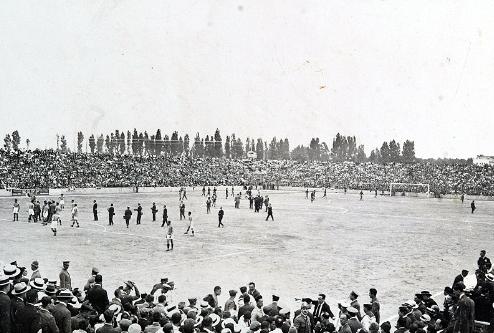
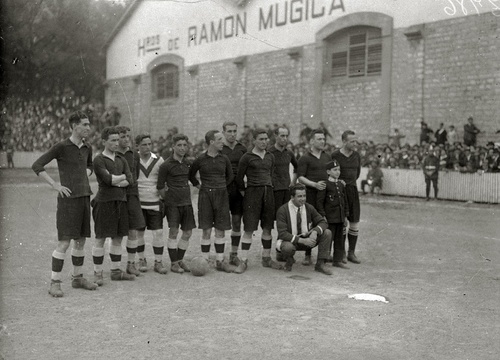
At the end of the 1927-1928 season, given the failure of the two league attempts, the clubs and the RFEF knew that they had to reach an agreement for the good of everyone. In June 1928, in the facilities of Real Madrid, the representatives of the clubs that had formed the "Liga Máximalista" and the "Liga Mínima" meet to agree the creation of a league that satisfies everyone. Members of the following clubs assisted: Celta de Vigo, Deportivo de la Coruña, Sporting de Gijón, Real Oviedo, Racing Santander, Gimnástica Torrelavega, Athletic Club, Arenas Club, CD Alavés, FC Barcelona, RCD Español, CD Europa, SD Iberia, Real Unión Irún, Real Sociedad, Osasuna, Athletic Madrid, Valencia FC, Real Murcia, Sevilla FC and Real Madrid FC.
The debate was held with normality, studying several formats of competition, although none of them received the overall approval. In order to find a definitive solution, an executive commission formed by representatives of Real Madrid, Athletic Madrid, FC Barcelona, RCD Español, Iberia SD, Real Sociedad, Athletic Club, Real Unión and Sevilla FC was named to find a solution. This executive commission held new meetings at the end of June, once the last Copa final had been played. This commission presented a proposal about the creation of the Campeonato Nacional de Liga (from now on, Liga). The proposal was the creation of a first division (Primera División) formed by 8 teams, the six historic Copa winners (Athletic Club, FC Barcelona, Real Madrid, Real Unión, Real Sociedad and Arenas Club) plus Athletic Madrid and RCD Español, considered two of the oldest clubs in Spain. The second division (Segunda División) would be formed by Sevilla FC, Sporting Gijón, Real Oviedo, RC Celta, RC Deportivo, Racing Santander, CD Alaves, CA Osasuna, Iberia SD, CD Europa, Racing Madrid and Valencia FC. In the early days of July, the proposal was rejected in the National Assembly by the excluded teams and for those who bet for a bigger league (the historic winners did not want to accept more than 8 teams). The disagreements still existed and the Basque clubs threat to break the negotiations to create their own Copa tournament, the clubs of Galicia also threat to enter in the Portuguese league, while others protested since they considered Real Sociedad should not be considered direct heir of the Club Ciclista that won the Copa of 1909.
The discussions were eternal and new debates were held in September and October. Finally, at the end of November, when the regional tournaments and the Copa had already started, the Extraordinary National Assembly agreed the creation of a league of 10 teams: the six Copa winners, previously mentioned, plus three finalists: CD Europa, RCD Español and Athletic Madrid. The 10th team would be the winner of an intensive previous tournament that had to be played by the Segunda División teams: Sevilla FC, Racing Santander, Valencia FC, RC Celta, RC Deportivo, Sporting Gijón, Iberia SD, CD Alavés and Real Betis. Since the winner of this tournament would not end up playing in Segunda, Racing Madrid would occupy the vacant in Segunda División.

The teams
Athletic Club
The Basque club was managed by Máximo Royo, who replaced, the Hungarian coach Lippo Hertzka. At that point, the president De la Sota and the manager Royo decided to start a deep renewal and their most important players were the goalkeeper Blasco (19 years old), the midfielder Garizurieta (20 years old) or the forwards Unamuno (19), De la Fuente (21) and Chirri II (19). Their last biggest achievement in the national level was the Copa victory of 1923, although they still had won the last regional tournament in 1928. Athletic Club was the most successful club ever in the Spanish football, although their recent seasons had been disappointing, compared with their golden era in the previous decade, so they were not a clear favorite to win the titles that had to be played this season. The youth of the team made unpredictable their performance in the season that had to start.
FC Barcelona
The culés were considered the best team of the moment. In the previous years, the club managed by Romà Forns had won three of the last four Copas and their dictatorship in the regional level was a fact. The Catalans had a very strong squad with very important players. mixing veteran players and promising names, like the legendary goalie Platko (30 years old), the German defender Walter (28), the mids Castillo (20) and Guzmán (27), or the forwards Piera (25), Sastre (22) or Parera (21). Among them, the forward Josep Samitier (26) was not only the star of the team, but also the best player of those years. The recent titles and the quality of the squad made everyone consider Barcelona the biggest favorite for this new season.
Real Madrid FC
The madridistas had been living their worst years in terms of results. In the Copa del Rey, their only achievement had been a final in 1924 and Athletic Madrid had emerged as big rival in the regional tournaments. In this situation, the club decides to make a radical change in their approach and, with the resignation of José Berraondo, the club signs the former barcelonista and madridista player José Quirante and starts a race to sign important players. As a consequence of it, players like the promising striker Jaime Lazcano (19 years old) and the veteran Juan Urquizu (27), sign from Osasuna; the young Gaspar Rubio (21) signs from Levante; and the club "steals" from their local rival, the Athletic Madrid star, Triana (26), a player of the so called "the Athletic Madrid of the lords", as a consequence of the internal institutional problems of this club, which caused some delay in the payments. Aside this signings, the veteran players José M. Peña (33), who had signed from Arenas Club in 1926, and the icon Monjardín (25) were the references of the team. All these signings made the fans dream for a better season.
 |
| Jaime Lazcano in Real Madrid |
Real Unión Irún
The irundarras had been living their best years, winning 5 regional titles and 2 Copas (aside another final) in the 1920s. The core of the team had very recognizable names like the midfielders René Petit (29 years old) and Francisco Gamborena (27), the goalkeeper Emery (23) and the young forwards Garmendia (23) and Luis Regueiro (20). Most of the team was quite veteran and, with the arrival of professionalism, the club mainly focused in keeping the team instead of signing players, since the club did not enjoy the economic resources of other clubs of Spain that were getting reinforced. Despite the recent titles, the feeling around this team is that Real Unión was formed by quality players, but their peak time had passed in most of them.
Real Sociedad
The team managed by Benito Díaz since 1926, as player-coach, had just lost the Copa final against the legendary Barcelona of Samitier. The great star of the team was Paco Bienzobas, a 19 year old striker that had showed his potential in the last couple of seasons despite his young age. But the rest of the team was a solid block of young players that was also the core of the Spanish team in the Olympic games of Amsterdam 1928, with players like the forwards Yurrita (24), Mariscal (24), "Cholín" (22) and "Kiriki" (21); the goalkeeper Izaguirre (22), the defender Ilundain (20) or the mid Marculeta (21). With this young but competitive squad and the precedents of the team, Real Sociedad was considered one of the best teams of the moment and a clear contender for any title.
Arenas Club
The areneros were another humble club. Located in Getxo, in the Gran Bilbao comarca (although they played their games at Ibaiondo in the same Bilbao city), this club has raised as the big rival of Athletic Club during the last decades in the regional tournament and had reached two Copa finals in recent editions (1925 and 1927). The unquestionable stars was their forwards Yermo (25) and Gurruchaga (20), along with other traditionals of the team, like the defender Llantada (21) and the veterans like the goalie Jauregui (32) or Vallana (31), although these two players were not usual anymore. Arenas did not have the economic power of their rivals, so their players were mainly local. Arenas Club was considered a good team, but did not count as one of the big favorites to win the league.
 |
| Español's José Padrón |
RCD Español
The pericos had been a club in trouble during the last decade. While Barcelona's popularity grew, Español struggled to find the economic resources. As a consequence of it, despite having very important players like the myth Ricardo Zamora (27 years old), the great young forward Padrón (22), or the veteran defender Saprissa (27), the club had been forced to tour through other countries of the World while playing the regional tournaments with the reserves. The reason of it was the World-wide fame of the goalkeeper Zamora and the need of finding money for the club. The president Genaro De la Riva, despite the talent of the team, had put the priorities in the survival of the club, while Barcelona and Europa grew over them in the official tournaments. The team was considered to have very important players of recognition, although the lack of references in official tournaments made them be a mistery. For this season, the most important event was the signing of the former Barcelona player and coach, Jack Greenwell.
Athletic Madrid
Under the presidency of Juan Urquijo, the club had reached the Copa final of 1926 and had been the winner of the last regional tournament (1928). The team was considered to have some great talents like the forwards Luis Olaso (28), Vicente Palacios and Cosme (24). The president Urquijo signed Fred Pentland from Oviedo to drive the team again, trying to repeat the success of 1926. However, the club had financial problems and, as a consequence of them, the forward Triana had left the team to join Real Madrid in a painful event for the club. Despite the talents in the team, the departure of some of the "Lords" of Athletic Madrid had weakened the team and was not considered one of the main challengers for the title.
 |
| CD Europa's Carles Bestit |
The humble club of Barcelona was located in the Gràcia district of the city. Despite they did not have the economic power of their biggest rivals, FC Barcelona and RCD Español, the club had raised as power in the Catalan football in the 1920s, winning a Campionat de Catalunya and reaching a Copa final in the year 1923. In these years, CD Europa had been the second team of Catalonia in terms of results and counted on players like the forwards Bestit (20) and Cros (27) as main reference of the team. Their humble status made them focus in the permanence in Primera División. The coach was the Austrian Karl Heinlein and the squad probably was the most veteran team in Primera División.
Racing Santander
Racing Santander had to win the knock-out tournament to decide the last member of Primera División. The club's star was the Irish coach Patrick O'Connell, who had driven the team to a long list of regional titles and, the most important, to Primera División, leaving behind important teams like Valencia, Real Betis and Sevilla FC. The team was the most humble of the tournament and their players did not have the fame of others. In this team, the main references were the winger Santi Zubieta (18), the midfielder Larrinaga (17) and the powerful striker Óscar (25).
Copa del Rey
With the creation of the Liga, the Copa del Rey changed the format to become a pure knock-out tournament again. Since the discussions to create the new tournament were long, the Assembly of the RFEF decided to advance the regional competitions in order to play the tournament before the first games of La Liga. As it had always happened since 1913, the participants of the competition had to get their ticket in their regional tournaments. New regional tournaments appeared while Catalonia, Madrid, Bizkaia and Gipuzkoa got new places, so also the third team of these competitions were allowed to play the tournament. These were the participants:

In the pure draw, the big clash is the one between Arenas Club and Real Unión, two historical clubs of the tournament. Arenas Club is superior in both legs and advanced to the following round. This round did not have big surprises among the giants. Still it was remarkable the victory of Racing Ferror on the winner of the Bizkaia tournament, Alavés, who counted on players like Ciriaco or Quincoces. Aside these games, it is important to highlight the victory of Valencia on Europa and the defeat of Sporting Gijón against RCD Español.

The press of those years considered that the first leg of the Round of 16 was conclusive in its results. The clash between Barcelona and Real Sociedad in Les Corts was the most interesting clash and also the most shocking result. The "replay" of the final 1928 was not a revenge for Real Sociedad, who got trashed by a brilliant Barcelona (6-0). Another big clash was the one between Arenas Club and RCD Español. The pericos and the areneros gave the fans of Getxo a big show, but a disappointing result, since the 4-6 seemed almost definitive with the 2nd leg to be played in Sarrià, Español's home .At the same time, the media considered surprising the victory of a declining Racing Madrid on Valencia at Mestalla (1-3). The valencianistas were considered a team that was growing and this result exposed the ché team, who got defeated by a Racing Madrid that played with more heart than football anyway. The two giants of Madrid did not have problems to defeat their rivals easily. So Athletic Madrid won 2-3 away in Gimnástica Torrelavega's home and Real Madrid crushed Logroño in Chamartín (8-0). The victory of the Valencian champions, Castellón, on Elche (5-0) was not a surprise either. The victory of Sevilla in the tough stadium of Osasuna (0-1) was interpreted as a symbol of the recovery of the sevillistas, while Athletic Club could only tie in Ferrol, although this result was good enough to face the next round.
In the second leg, the result only came to confirm what was seen in the first leg. Considering the initial results, no big surprises happened. RCD Español confirmed the superiority shown in Ibaiondo to end up eliminating Arenas Club from the competition (3-1). Real Madrid crushed Logroño in the away game too (0-5), while Athletic Madrid showed problems to advance against a fighting Gimnástica Torrelavega (1-1). Athletic Club was very superior in San Mamés and clear any kind of doubt on them (4-0). Castellón was also victorious in Elche (0-2) and Sevilla's football convinced in the 4-2 triumph on Osasuna. In a muddy Atotxa, the game between Real Sociedad and Barcelona was preceded by a hostile atmosphere against the culés as a consequence of their recent clashes, but the result of the first leg was impossible to overcome (0-0). In Madrid, the team of the Chamberí district, Racing Madrid, ended up surprising Valencia FC (2-1) and the valencianistas got eliminated from the competition after the euphoria created in the city for their victory on Europa.

Quarter finals - Jan 6, 1929 - Jan 13, 1929
In this round, the favorites did not fail either. The most interesting game was the derby of Madrid, between the team of Chamberí, Racing, and the one of Chamartín, Real Madrid. The madridistas were the clear favorites and they did not miss their chance to buy their ticket to the semifinals of the Copa del Rey with a brillian 1-3. At the same time, in Sarrià, Español confirmed that their regional title (the first since 1918), won with the team remaining unbeaten, had not been an anecdote. The pericos crushed Athletic Madrid with a clear 5-1 that left the team of the capital of Spain without options, while Español rose as one of the main favorites to win the title. FC Barcelona did not fail in Seville either. The 0-1 in the capital of Andalusia was not as definitive result, but Barcelona had never lost in Les Corts in this competition. More problems had Athletic in Castellón, but the Basque team achieved an 1-1 draw that was a positive result to face the 2nd leg at home.
In the second leg, the favorites did not fail. The press considered that Barcelona's victory on Sevilla (2-0) had been fair, but discreet. At the same time, Athletic suffered too much against a dangerous Castellón, who put things more difficult than it had been predicted (2-1). In the Metropolitano, Athletic Madrid wanted to impress their fans and they surely did against an Español that was defeated for the first time in the entire season (4-2). In Chamartín, the madridistas showed their clear superiority (6-2) against a weak Racing Madrid that had gone further than it had been guessed at the beginning of the tournament. The good results and nice style showed by Real Madrid impressed the press, who started to label them as one of the favorites for the final victory after lots of years of disappointing results. The only teams missed by the press were Europa and Alavés, who had been considered stronger than they finally showed.

The semifinals were the key moment. Finally, four classics of the competition met. As it was tradition, the clubs of Catalonia, Madrid and the Basque country showed up as the strongest. The first semifinal was played between Real Madrid and Athletic Club. Both clubs were looking for the glory lost in the recent years. Real Madrid had been struggling without a final since 1924 and without a title since 1918. Athletic Club, the club with more Copas, had also been 6 years without a national title. The first leg was played in Chamartín, Real Madrid's home. Real Madrid was considered the favorite by the press, given their great form and results, while Athletic had some absences to face this game. Real Madrid won 3-1 as it was predicted, but the madridistas suffered too much in the last moments of the game, when Athletic scored their only goal and threatened Madrid's goal with chances that were not converted.
In Sarrià, Español and Barcelona played the first Copa derby in years. The pericos were the favorites given their amazing superiority in the regional title, while Romà Forns' team had not reached the level shown in the previous season. The matched was marked by the injury of Guzmán, who left Barça with ten men since the minute 5. Playing against ten, Español owned the game in every sense, while Barcelona could only defend their goal in the best possible way. Español got a good 2-0, but still not definitive with the 2nd leg in sight to be played in Les Corts.
In the second leg, in Les Corts, the press wondered what Barcelona could do against Español in their stadium. Since the first minutes of the game, Barcelona looked for the goal to enter in the game and they did it, but before half time, Español was able to draw. The remaining 45 minutes did not have story. A frustrated Barcelona crashed against Español's defense and the game turned ugly, as it was often in these derbies. But the 1-1 was the final result. Español, who had triumphed in the regional tournament, had defeated Barcelona in the Copa too and reached the final of Valencia.
In San Mamés, Real Madrid achieved a historical victory. The 1-4 could only confirm that Real Madrid was the team of the moment. The tournament of the madridistas had been almost perfect, but this was the kind of prestigious victory that imposed respect in the rivals. Athletic actually dominated all the first half, but they could not score the goal they needed, which mainly showed the efficiency of the merengue defense. In the second half, Real Madrid crushed Athletic at home and getting the admiration of everyone. The madridistas were in the final of Mestalla.

Final - Feb 3, 1929
The final was played in Mestalla, packed with 25,000 fans, lots of them travelling from Barcelona (4,000) and Madrid (8,000). Real Madrid and RCD Español were playing a historical final that broke the domination of FC Barcelona and the Basque clubs. There was not a clear favorite for this game. RCD Español had triumphed in the Campionat de Catalunya, with a magnificent defense led by Ricardo Zamora and Saprissa, while the leader of their attack was the fantastic José Padrón. Jack Greenwell had built an impressive squad, just as he had done with FC Barcelona some years ago. In Real Madrid, José Quirante was the opposite, a young and inexperienced coach, but definitely a talent that had made the club live great moments after years of disappointing results. This final was marked by the unusual heavy rain that fell on Valencia that left the state of the pitch in awful conditions. It passed to history as the "final del agua" (the water final).
The muddy state of the pitch forced both teams, who were technically gifted, to play direct football instead of their usual passing style. The rain and the mud turned the game ugly since the first minute and the physical contact was usual. Only 3 minutes had passed, Quesada blocked Broto inside the madridista box and the referee awarded the penalty. González shot the penalty, but the madridista Cobo stopped it. After this penalty and during all the first half, Real Madrid was superior, but just as Cobo had been great stopping the penalty, Ricardo Zamora was also essential to keep the clean sheet for Español. At half time, the result was 0-0.
 |
| Español in the final of Mestalla 1929 |
In the second half, Real Madrid kept attacking Zamora's goal, but in a lost counter-attack, Vantolrà made a fantastic individual actions and found Tena, who shot to the left upper corner of Cobo's goal. In the minute 10 of the second half, Español took the lead. This goal did not stop Real Madrid, who kept looking for the goal. An important incident happened only ten minutes later, in the 65'. As a consequence of a fight, the referee Pelayo Serrano sent off three players: the españolistas Broto and Tena and the madridista Rubio. With one man less, Real Madrid's attack got more constant, but the pass of minutes also made them take risks. And it was Padrón who found Bosch, who was alone and executed Cobo to score the second for Español. With 20 minutes to go, Español was two goals up and one man down. Real Madrid, knowing this superiority, kept insisting on Zamora's goal and five minutes later, the striker Lazcano put Madrid in the game again with his 2-1. Real Madrid's attacks got furious, but Zamora emerged as the hero for Español. In the last minute, the madridistas protested a penalty in Español's box and the incident ends up in a new brawl and two other players were sent off too, the madridista Triana and the españolista González. RCD Español ended up resisting, with Zamora as hero, while the madridistas disappointed, especially their attack, very inefficient in this rainy afternoon. It was a historical day for RCD Español, Jack Greenwell had taken them to their first Copa title in history.
 |
| Linguasport.com |
La Liga
Only one week after the Copa final, the first edition of La Liga started. The preview of the press before La Liga exposed the state of euphoria in Español, who had triumphed in the regional tournament and in the Copa. The madridistas were disappointed with the result and, as Español, worried about the absences in the first Liga game due to the ban on the players who had been sent off in the Copa final, but they were definitely rated highly before La Liga had to start. The two Basque teams, Athletic and Real Sociedad, were considered to have good options in this race and they had to face each other in their debut in the game of the week, according to the press, while there were doubts on Barcelona, given their recent form.
In the first week, Español defeated Real Unión, despite the multiple absences in their initial XI. The pericos had to overcome a 1-2 in the last 20 minutes to win the game. At the same time, Real Madrid defeated Europa with a clear 5-0, although the local team had more problems than the scoreboard suggest, since all the goals were scored in the second half. Lazcano scored four goals for the madridistas. In Atotxa, Athletic had to tie the initial goal of Real Sociedad for a fair draw in the Basque derby that left a better taste for the visitors. The surprising result was the victory of Athletic Madrid against Arenas Club in Getxo with unexpected superiority. The week was closed with an a victory of Barcelona in Satander against Racing, achieved in the second half, but only assured in the last minutes of the game, with a great Parera leading the team.
Just a week later, the most attractive game was the visit of Real Madrid to Les Corts. A more efficient than beautiful Real Madrid defeated Barcelona at home and the absences in the starting lineup of the Catalans did not stop the first rumors of a possible replacement in the blaugrana management. The two goals of Morera made impossible the late attempt of comeback by Barcelona. Español had a complex visit to San Mamés, a defeat was possible, but the 9-0 was a heavy humiliation that was strongly criticized in the press. Carmelo and Lafuente scored a hat-track each. Real Sociedad showed their strength in their visit to the Metropolitano, only needing the first half to crush the local team, while Arenas disappointed in their visit to Europa's home, where the striker Cros showed up as great star scoring four goals. Real Unión achieved an expected victory on Racing, although they had to overcome the initial goal of the visitors in the second half. These results gave Real Madrid the leading position, as they were the only team to win the two initial games..
 |
| Samitier and Obiols stop Lazcano in the first Barça-Madrid in La Liga |
In the third week, Real Madrid kept their leading position with a new victory, this time in the derby against Athletic Madrid. It had to be Triana, former Athletic icon, who scored the two goals of Real Madrid to overcome the initial 0-1 and defeat their neighbors. The reviews still considered the madridistas more efficient than powerful and convincing in their performances. Español showed a great image against Europa though and the press saw the Copa winner in their game. In just 20 minutes, the pericos had solved the game with three goals. Athletic kept impressing everyone with their amazing attacking power with another hat-trick by Lafuente, this time in Santander. Barcelona was crushed in their visit to Real Sociedad in a pathetic first half of the Catalans. The Basque team showed a convincing image against a poor Barcelona. Arenas and Real Unión tied in a disappointing game too.
The fourth weekend did not changed things much. Real Madrid struggled to beat Real Sociedad in Chamartín, but the madridistas kept the perfect sheet with another victory. The madridistas were still criticized for their football, but their results were out of question. Their two early goals were almost balanced by the goal of Bienzobas and the constant attack of Real Sociedad in the last half an hour. Español and Athletic were also growing in the standings, with two easy victories at home against weaker rivals, like Racing and Europa respectively. There was also a surprising victory of Athletic Madrid in Irún. The shock was in Barcelona, since the culés did not see the light with another disappointing result, a draw against a weak Arenas Club, with a brilliant Yermo for the Basques.
 |
| Yermo (Arenas Club) scores in Sarrià against Zamora (Español) |
The results of the fifth week had the first big impact in the standings. Real Madrid reinforced their position in the top of the standings with a predictable victory against Racing. Once again Real Madrid had to overcome an initial bad result with a good second half. While the madridistas had won everything, the racinguistas collected five defeats in a row. Real Madrid increased their gap up to three points on their main rivals. Athletic was defeated in Arenas' home, in what it was the surprise of the weekend, although the goals of Yermo were not surprising anymore. Español achieved an important draw in Atotxa against Real Sociedad in the last minutes of the game, but they also lost track with Real Madrid. Athletic Madrid achieved another easy victory on a unrecognizable Barcelona, who were in deep crisis and got destroyed by the press. Europa and Real Unión tied in an useless draw for both of them.
After a weekend used for an international game between Spain and Portugal in Seville (5-0), the first after the failure in Amsterdam 1928, with the Spanish team mainly formed by españolistas and madridistas, La Liga returned with the sixth matchday. In Sarrià, a very important game had to be played. The "invincible" madridistas visited the Copa winner. Revenge or comeback? The answer of Español was solid, a 4-0 against Real Madrid was considered as a recovery of Español, who started to appear as a serious threat for Real Madrid. The madridistas, who had not been playing in a brilliant way, saw how their efficiency disappeared against the pericos. Athletic Club did not take advantage of it, since they disappointed with a new defeat, this time in Irún, against Real Unión. The irundarras led by Regueiro in attack, destroyed Athletic in a magnificent first half for a final 6-3. Arenas Club continued with their good run of results with a convincing victory against Real Sociedad, with the brilliant Yermo in top form scoring two more goals. Barcelona found some oxygen in an easy victory on the weak Europa. Despite this result, Barcelona replaced their coach, Romà Forns, to sign James Bellamy from the Italian Brescia. Athletic Madrid grew in the standings with their victory on the weak Racing Santander.

The 7th week turned out to be very positive for Real Madrid. The madridistas recovered their three point gap on their rivals with a victory on Real Unión with two goals by Gaspar Rubio. As it was usual in the Liga season, the madridistas were more efficient than convincing in their football, but their results were unquestionable. The main doubts on their future were their following visits to the always tough Northern stadiums. But their rivals were very irregular. Español was surprised by Arenas in Sarrià with a goal of Gurruchaga when the match was about to finish. Their previous victory against Real Madrid became an anecdote with this new defeat, while Arenas started to appear as unexpected challenger, showing their good state of form. Athletic Club recovered from their bad results with a huge 5-1 victory against a Barcelona that was totally out of track, despite the arrival of the new coach. Unamuno and Lafuente toyed with the Catalans in the second half. Athletic Madrid disappointed in their visit to Europa, while Real Sociedad crushed a poor Racing with their sublime attack: Bienzobas, "Cholín" and "Kiriki".
 |
| Bienzobas |
The first round of the league was closed after a break for an international match of Spain. The Spanish team defeated (8-1) France in Zaragoza, with madridistas and españolistas still forming the core of the team. The ninth week of football had some important results. The leader Real Madrid got the visit of Athletic in Chamartín, the two top teams of La Liga so far. Real Madrid crushed Athletic (5-1) in a sublime game of the local team with Lazcano and Gaspar Rubio in top form. The madridistas closed the first half of the league with a solid top position, based on their regularity and their efficiency. With this defeat, Athletic kept their irregular line of results and, once more, failed to haunt the top position. Arenas Club insisted in their good moment with a tight victory on Racing. Real Sociedad failed against the weak Europa, showing an irregularity that was punishing them constantly. Español hailed their injuries of the derby with a victory on Athletic Madrid, who kept falling. Barcelona achieved their first away victory of the season with their triumph in Irún, who were not the team of the past, in a great second half of the Catalans. At this point, Real Madrid was a solid leader and Arenas Club was their main threat given their form. Athletic Club, Real Sociedad, Español and Barcelona followed them from some distance, given their constant irregularity.

The second round of La Liga was opened with a 10th week of football that had important events in the standings. In Barcelona, Real Madrid got surprising crushed by Bestit's Europa. The europeos made a fantastic first half to destroy Real Madrid. Once more, Bestit was the main reference of Europa, scoring four goals. With this result, the madridistas lost their gap on Arenas Club. The areneros triumphed against Athletic Madrid. The Basque team shared the top position and points with Real Madrid. The irregularity of Real Madrid and the constant rise of Arenas made the Basques feel positive about their future. The other main rivals of Madrid took advantage of the situation to cut distances. So Athletic Club defeated Real Sociedad in San Mamés in an intense Basque derby, scoring three goals in the second half to overcome the 1-2 at half time, while Barcelona had it easy with Racing Santander, with Arocha in top form. Español failed in their visit against the weak Real Unión, wasting a good opportunity to grow in the standings and evidencing they were not the team that had impressed everyone in the regional tournament and the Copa.
The 11th week had some delayed games, so it started with Arenas looking for an at least eventual top position. And they achieved a draw that actually gave them the lead in the standings, but the 1-1 at Ibaoindo, Arenas' home, against the weaker Europa could only be seen as a failure in a key moment. Bestit ruined Yermo's party in the last minutes of the game. After 6 victories in a row, their good run stopped in the most unexpected moment. In Sarrià, Español and Athletic played a decisive game, especially for the local team. The team of Jack Greenwell and Ricardo Zamora did not fail to achieve an important and convincing victory on Athletic to keep surviving in La Liga with a hat-trick by Gallart. Three days later, the week was closed. Barcelona visited Chamartín in a decisive game for the culés. Since James Bellamy took the team, the recovery of the team was evident, but they needed to confirm their good state against Real Madrid. The madridistas were affected by many injuries and ended up noticing them. Barcelona took their revenge and defeated their rivals in Chamartín with a goal scored by Sastre in the last minutes of the match to confirm that they were surprisingly back in the race for the title. For the first time in the entire season, Real Madrid was not the leader of La Liga. At the same time, Real Sociedad missed their chance to enter in this race with a draw against a broken Athletic Madrid.

Only one week later, the 12th matchday started with surprising results. Arenas Club, who had reached the top only 3 days before, was destroyed in the Gal Stadium by Real Unión. After the good run of results, Arenas Club started to fail in the key moments and this time it was against a Real Unión who were struggling to achieve good results. The 7-1 was extremely harmful for Arenas though. At the same time, Athletic Club could not pass from a poor 0-0 draw at home against Racing in a huge error at this point of the season. Previously, Español had defeated Europa in a Catalan derby that was fully dominated by the pericos. With this result, Español seemed ready to compete for the top position looking for a historical treble. The rest of matches were delayed 3 weeks, because the RFEF had organized a historical friendly game against England.
For the first time ever, the Spanish NT met the inventors of football. It was in the Stadium Metropolitano, in Madrid. The Spanish NT formed with Zamora (RCD Español); Quesada (Real Madrid), Quincoces (CD Alavés); Prats (Real Madrid), Peña (Real Madrid), Marculeta (Real Sociedad); Lazcano (Real Madrid), Gpiburu (FC Barcelona), Gaspar Rubio (Real Madrid), Padrón (Español), Bosch (Español). The Spanish NT won the game (4-3) with two late goals scored by Gaspar Rubio and Goiburu. It was the first defeat of the English NT out of British Islands in history.
The 13rd week had some games delayed, but Real Madrid played to recover the first position in Atotxa. In an extraordinary balanced and tight game, Real Madrid ended up losing a game that they had in their pocket with ten minutes to go, in goals scored by Marculeta and "Cholín", which costed them the two points. With this defeat, the madridistas made evident their bad moment, the worst in the entire season, as Real Sociedad grew in the standings in a late effort to fight for the title. Athletic Madrid defeated Real Unión, although none of them was a challenger for the title. The rest of games were delayed as Español rose as eventual leader.
The 14th week was the one of normality after some delayed games. As the key moments arrived, the emotion grew and the errors were paid. Español got surprised at home against Real Sociedad, who due to a goal of the great Bienozbas, resisted to surrender in La Liga. At the same time, Real Madrid's poor form was more worrying and evident than ever and they tied at home against the weak Racing Santander. Arenas took advantage of all these results to climb to the top again, even if it was just in an eventual way, given the delayed games. Bellamy's Barcelona was the other team that was favored by the results and, for the first time in the entire season, a title was a very likely possibility. Their 4-0 victory on Athletic Madrid with a magnificent Samitier was the reason of it.
 |
| Español 1929 |
All the delayed games (except the Arenas-Barcelona) were played in a mid-week journey. In the derby of the capital, Real Madrid solved their game against a sinking Athletic Madrid, recovering the top position of the standings. A top position that was not really effective. Barcelona and Arenas were with one game in hand and, since there were four teams on top with 17 points (Real Madrid, Barcelona, Arenas and Español), any result in the clash between Catalans and Basques would have changed this position. This delayed game was postponed until the end of June. In fact, Español missed their chance to reach the top with a disappointing draw against Racing in Santander. Athletic Club were just two points away from the top, but their draw in Europa's home was a serious error in this race.
La Liga entered in the last month of competition and, definitely, June opened with good news for Real Madrid in a perfect 15th week for them. The madridistas had to receive the visit of a rising Español in Chamartín in a clash that was decisive in the race for the title. In a key moment, the press highlighted the great game of Real Madrid against Español and their striker, the rising star Gaspar Rubio, emerged to put Zamora's Español in problems to fight for the title. This result was even more positive considering the draw of Barcelona against Europa in the new stadium of Montjuïc, which had opened for the International Exposition 1929, where the game was hosted. In this Catalan derby, Barcelona disappointed and lost a point that could be essential in the race for La Liga. But Arenas definitely damaged their chances with their defeat in Atotxa in their Basque derby against Real Sociedad in a very tight game. With all these results, Athletic also recovered some of their chances with a home victory against Real Unión.
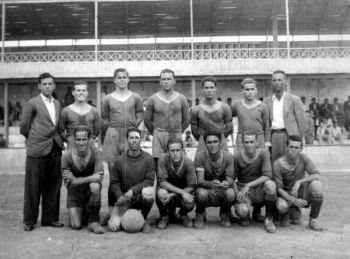 |
| Arenas Club 1929 |
Given this situation with three weeks to go, Barcelona and Arenas had one game in hand to be played in Ibaigondo. Real Madrid's fixtures were tough, with two visits to the Basque country to face Real Unión and their direct rival, Athletic, in a game of big rivalry, and also receive Arenas in Chamartín. Aside the delayed game, Barcelona had to be visited by Athletic and Real Unión at Les Corts and had to play their chances in Montjuïc, where Español played the last games of this season. In the case of Athletic, aside these games against Barcelona and Madrid, they also had to face Athletic Madrid. Español had to play against Arenas and Athletic Madrid away and Barcelona at home. Arenas, the last challenger, had to play games against direct rivals like Español in Sarrià, Madrid at home, Athletic Madrid away and Barcelona at home. The tight standings were as it stands:

The last three weeks started and there was nothing decided, but the 16th week had to start to clarify things and it surely did. In a direct clash for the title, in a classic in Les Corts, Barcelona confirmed their great form with an important victory against Athletic based on 20 fantastic minutes of the second half with Samitier showing up in the important moments. As Barcelona kept their options in La Liga, Athletic saw how their chances started to vanish in Catalan lands. At the same time, in the other direct clash for the title, Arenas Club finished with the Treble dream of Español in the first 45 minutes of the game, with a 3-0 that allowed the Basque team to be a definitive option for the last games. Real Madrid did not fail to keep their position on top with a hard-working victory in Real Unión's home, saving a very complicated away match. Real Madrid (21 points), Barcelona (20) and Arenas (19), the last two with a match between themselves in hand, were the only options.
The 17th week had to have consequences. Arenas visited Chamartín and Barcelona had to visit Español in the eventual home of the pericos at Montjuïc. In Barcelona, as the culés were fighting for the title, Español's main goal was to avoid this fact. The game was very tight in the first half and Platko saved Barcelona (and the title chances) in a penalty shot by Saprissa. The second half started with a fast goal of Español that really left Barcelona in trouble, but the blaugranas were able to save a point in the last minutes of the game with a goal scored by Sastre. At the same time, in Chamartín, and considering the result of Barcelona, Real Madrid gave a great step forward in the title race with another convincing victory in a key moment of the season and, this time, against Arenas. The goal of the captain Quesada in the first half and Triana in the last moments of the game left Arenas out of the title race. These results left only Real Madrid and Barcelona with options, although Real Madrid had the title in their hands. The 2 point difference was not definitive 100% even with a madridista victory in the not-so-easy stadium of San Mamés, but the goal difference was so favorable to Real Madrid that this eventual victory would leave Barcelona without chances, unless a miracle had to happen.
The last week was passionate, but did not solve anything yet. Real Madrid visited San Mamés looking for a victory that would almost give them the title, but everything went in the wrong direction for them very soon. Only after three minutes, Athletic was able to score, putting La Liga upside down. Real Madrid's behavior was good and the team fought for the goal to draw. But in the second half, Athletic scored the second and the madridistas Rubio and Lazcano, who had been brilliant through all the tournament, failed to appear in this important day. In Les Corts, Barcelona knew that their title chances passed through two victories and this is what they looked for since the very first second. Barcelona crushed Real Unión in an easy game and the result of San Mamés was considered as positive. Tied in points and with a match in hand, La Liga was in Barcelona's hands to be won or lost one week later in Ibaiondo, Arenas' home.
In this game, played in Ibaiondo, Barcelona needed one point. As it was predicted, Madrid was better in the goal difference and Barcelona needed to tie or win the match to win the title. As it had been proven during the season, Ibaiondo was not an easy visit and Barcelona had to suffer. At half time, the result was a tight 0-0 that left things open to any possible option. In the second half, Arenas was playing better, but Parera ended up giving the lead to Barcelona after 20 minutes. Only a few minutes later, the same Parera scored the second and the last minutes did not change anything. Barcelona won the game in Ibaiondo (0-2) and, as a consequence, the title: FC Barcelona was the first Liga champion.


The 17th week had to have consequences. Arenas visited Chamartín and Barcelona had to visit Español in the eventual home of the pericos at Montjuïc. In Barcelona, as the culés were fighting for the title, Español's main goal was to avoid this fact. The game was very tight in the first half and Platko saved Barcelona (and the title chances) in a penalty shot by Saprissa. The second half started with a fast goal of Español that really left Barcelona in trouble, but the blaugranas were able to save a point in the last minutes of the game with a goal scored by Sastre. At the same time, in Chamartín, and considering the result of Barcelona, Real Madrid gave a great step forward in the title race with another convincing victory in a key moment of the season and, this time, against Arenas. The goal of the captain Quesada in the first half and Triana in the last moments of the game left Arenas out of the title race. These results left only Real Madrid and Barcelona with options, although Real Madrid had the title in their hands. The 2 point difference was not definitive 100% even with a madridista victory in the not-so-easy stadium of San Mamés, but the goal difference was so favorable to Real Madrid that this eventual victory would leave Barcelona without chances, unless a miracle had to happen.
.jpg) |
| Athletic's Lafuente |
In this game, played in Ibaiondo, Barcelona needed one point. As it was predicted, Madrid was better in the goal difference and Barcelona needed to tie or win the match to win the title. As it had been proven during the season, Ibaiondo was not an easy visit and Barcelona had to suffer. At half time, the result was a tight 0-0 that left things open to any possible option. In the second half, Arenas was playing better, but Parera ended up giving the lead to Barcelona after 20 minutes. Only a few minutes later, the same Parera scored the second and the last minutes did not change anything. Barcelona won the game in Ibaiondo (0-2) and, as a consequence, the title: FC Barcelona was the first Liga champion.
This was the most usual formation of the champion:
 |
| BDfutbol.com |
In Segunda División, the season developed along with the Primera División games. As in Primera División, the fight for the promotion place was very tight during all the season and the balanced level of all teams made the fight very beautiful. Sevilla FC was the team that ended up winning the first Segunda División season earning their right to play the promotion games against Racing Santander, who were the bottom team in Primera División. The first promotion game was played in Sevilla and the local team won with a short advantage (2-1). However, Racing Santander were able to overcome this result in the second leg (2-0) to keep their position in Primera División one more season. In the bottom part of the standings, the historical RC Celta got relegated to Segunda B along with Racing Madrid, who were really struggling to survive with very important financial problems.
Spain also presented a candidature to organize the first FIFA World Cup in the year 1930, which had to be decided in the Barcelona meeting of 1929. Along with Spain, other countries like Italy, Sweden, the Netherlands and Uruguay also presented their bids. At the end, Uruguay's bid included the construction of a big central stadium and the return of expenses for all the visitors and the rest of the participants withdrew. Uruguay, who were the World champions de facto, since they had won in the last Olympic games, were the first nation to organize a World Cup.
Conclusions
At the end of the season, the Catalan football was victorious. RCD Español had won their first Copa del Rey in history, while FC Barcelona won the first Liga ever. In this season, FC Barcelona was not the solid and unbeatable team of the previous campaigns. As a result of it, RCD Español won their first regional title in a long time and extended their superiority on their eternal rivals with a new victory in the Copa del Rey. These two teams probably had the most relevant players of those years, the goalkeeper Ricardo Zamora and Josep Samitier, rivals and good friends too.
La Liga was a relative success. In the first games, due to the long discussions, the fans did not live the attraction of the new event. While the heartbreaking games of the Copa were still rated highly, given the tradition of the competition, La Liga needed time to reach the heart of the fans. At the end, given the passionate moments of the last weeks and the prestige of the teams, the attendances grew and, despite all the problems, it was a big success.
As Barcelona won the title, confirming that they were the best team of the moment, they also showed signals of decline, while new threats appeared in the horizon. The young and competitive Real Madrid and Athletic grew in this season and seemed determined to live good moments again. Arenas Club, Real Sociedad and Español, more humble than the three giants, were the nicest surprises, while Europa, Real Unión and Athletic Madrid were veteran teams with a glorious past, but uncertain future. At the end, Racing Santander kept their position in Primera División too, since they defeated Sevilla in a promotion final.