Showing posts with label Jose Maria Del Nido. Show all posts

Monday, October 10, 2011

Spain is more blaugrana and less madridista

This morning, any madridista who bought one of their favorite newspapers, Diario AS, found a surprising headline: "El Madrid se queda solo" (Madrid are left on their own). In the cover of the newspaper, they also inform that Real Madrid gets more rejection in San Mamés (Bilbao), Reyno de Navarra (Osasuna), Anoeta (San Sebastián) and the Calderón (Atlético Madrid) than in the Camp Nou (Barcelona). They also highlight that the antibarcelonism in Madrid is bigger than the antimadridism in Barcelona. Aside this focus on Real Madrid, AS also shows that Rayo is the most appreciated club in Spain, while Sevilla gets the biggest rejection, while Valencia, Villarreal, Málaga and Granada have a good image.

All these headlines are based on a survey done by the agency Ikerfel for AS among fans of the Primera División clubs. It is also important to put the results into a context. 8 years ago, a survey done by the Generalitat (Government of Catalonia) showed that Real Madrid enjoyed more sympathies than FC Barcelona with a huge margin of a 20%. The last survey of this kind was done by CIS (the institute of sociological studies of the Government of Spain) in the year 2007 and this margin of sympathies had been reduced to 7 points. Nowadays, even though the ones who pick Barcelona over Madrid as their main favorite club is just a 1% (which is irrelevant, considering the margin of error), the difference grows to a 7% in favor of the blaugranas when it comes to secondary sympathies.

Diario AS cover - Oct 10, 2011

The survey starts focusing on sympathies, asking for the favorite club and secondary sympathies. In this aspect, we already stated that Barcelona and Real Madrid show a similar amount of fans (18% and 17% respectively). Atlético Madrid (8%), Athletic (7%), Betis (7%) and Valencia (6%) get expected results, which do not differ much from the last survey done in 2007. Back then, Real Madrid got a 32.8%, Barcelona a 25.7%, Valencia a 5.3%, Athletic a 5.1%, Atlético a 4.3% and Betis 3.3%. It is important to highlight the differences: in this new survey, the sample was the Primera División clubs while, 4 years ago, this limit did not exist.

But even with these differences, probably the most relevant fact is the growing sympathies of Barcelona as secondary option for football fans. While Real Madrid used to be the second choice of the Spanish fans back then (with Barcelona very near them), this time Barcelona appears as second or third option for the 26% of the fans of the Primera División clubs, while Real Madrid's percentage fall to a 20%. These secondary option is what makes the difference.

Popularity index. As.com

But in football, aside the sympathies, the antipathies are usual too. There is a thin line between love and hatred and football could not be different. The bigger the club is the bigger the feelings around them are, in one way or another. The most admired clubs usually are the most hated and this is what the survey shows. Real Madrid is the most hated club by the 39% of Primera fans, while Barcelona gets the opposition of a 30%. If we add secondary hatred options (that is, eliminating local and direct rivalries), the percentage grows against Real Madrid. The 51% of the Primera División fans claim to be antimadridistas, while this percentage gets reduced to a 40% in the case of those who label themselves as antibarcelonistas. Sevilla's (30%) and Atlético's (29%) image isn't much better.

Unpopularity index. As.com

The following part of the analysis is based on the differences among the fans of the different clubs. Based on this, Real Madrid is chosen as the club with more sympathies in 7 different stadiums (not counting the local team, of course). Some of the results are expected, like the support among the Betis fans, since both clubs share recent legends like Gordillo, Poli Rincón or Alfonso; or Racing Santander, for similar reasons, after all Gento was born in a town near Santander and both clubs have been carrying a really good relationship through the years, which includes transfers in both directions, as it shows the cases of Munitis or Canales in recent years. Other results are expected for different reasons, Real Madrid also holds sympathies in clubs of the region, like Getafe or Rayo Vallecano, since these clubs are in the historical area of influence of Real Madrid. Probably, the most unexpected is the support of the sevillistas, but the noise created by the president Del Nido seems that did not hide the big madridismo of the city of Seville.

In the case of FC Barcelona the sympathies are also expected in some cases. Barcelona gets a clear support among Athletic, Real Sociedad or Osasuna, that is, the Basque provinces. Despite there are some historical rivalries, especially with Athletic, all these clubs have something in common, their capacity to be a channel for the national aspirations of the communities they are in. Despite the historical reasons of each nationalism is different, the national feeling, either Basque or Catalan, recognize each other's identity and both definitely share similar tools to reach similar goals. In the cases of Valencia and Mallorca, FC Barcelona may seen with good eyes due to cultural reasons, since there is a common culture among Catalans, Valencian and Mallorquin people, although there is also a good share of animadversion in these regions against the so-called pan-catalanism, which is shown in the results too. Aside the socio-political links, it was also to expect the pro-barcelonisme in Gijón. Sporting and Barcelona share lots of legendary players for both clubs in the last decades: Quini, Iván Iglesias, Abelardo, Luis Enrique and now David Villa. The case of Málaga may be temporary. It is true that Barcelona has a solid base in most of Spain, including Andalusia, but these results may show the late rivalry between Málaga and Real Madrid... or maybe between Pellegrini and Mourinho.


For - against by fans of each club. As.com

When it comes to hatred, the madridistas have it clear: they hate Barcelona with passion (97%). It is evident that the hatred goes both ways and something similar happens in Barcelona, but the results show that the antimadridismo in Barcelona is lower than the antibarcelonismo in Madrid. There is an interesting fact: Real Madrid gets more hatred among the Athletic, Real Sociedad, Osasuna and Atlético Madrid fans than among the Barça fans. In the case of the antimadridismo, there are evident cases, aside the mentioned in Barcelona. Real Madrid has been an eternal rival of clubs like Atlético Madrid or Athletic Club. The political factor has an effect in other cases, like Real Sociedad or Osasuna. But there is a growing antimadridismo in new areas. The most evident cases are: Valencia, Málaga and Sporting. Valencia used to have a really good relationship with Real Madrid, but in the late 90s, the way Real Madrid used to sign the star of Valencia, Pedja Mijatovic, broke this friendship. The cases of Málaga and Sporting probably have a lot to do with the recent events, especially with the arrival of Mourinho and his attacks on these clubs and their prestige and commitment.

In the case of the antipathies on Barcelona, aside the evident case of Real Madrid, it was easy to expect the case of Espanyol, given their centenary rivalry. Out of these evident cases, Barcelona does not enjoy the sympathies of fans of the zones of influence of the madridismo: Getafe, Rayo and Santander. Aside them, there are cases of classic antibarcelonismo in Granada, recently promoted, and the secondary antipathies that probably have something to do with political reasons, as in Seville (both clubs) and Valencia/Mallorca (where catalanism and anticatalanism is polarized).

Aside the two giants, the results show classic rivalries, mainly local or regional, like Betis-Sevilla, Athletic-Real Sociedad, Málaga-Sevilla, Valencia-Levante, Osasuna-Zaragoza; and new kind of rivalries, due to recent polemic events like Getafe-Racing (due to the Copa semifinal of a three years ago) or Mallorca-Villarreal (due to the elimination of Mallorca from the European competitions as a request of Villarreal for unpayments).

Relation sympathy/antipathy. As.com

Mixing all this information, the picture shows that Sevilla and Real Madrid get the worst love-hatred differencial, by an important margin, while Rayo Vallecano, Málaga, Valencia and Villarreal get the best image among the Primera División fans. How can we interpret all these information?

There are several factors that have an influence when it comes to understand this new scenario. Real Madrid have traditionally been the club of Spain and they always carried this flag with pride while their international success always backed this position. On the other hand, as we already mentioned in the entry about football and nationalism, clubs like FC Barcelona and Athletic Club have traditionally been seen as representatives of their national and identity aspirations.

But in recent times, FC Barcelona rose as new power in Spain and Europe with a very particular style. It is evident that success goes along admiration. The current admiration on Barcelona is based on their domestic and international triumphs and, as a consequence of it, they gather the support that the winners use to have. But there are other factors that help to understand this support beyond success. While the main reason of hatred of Barcelona has always been the catalanism of the club, the fans of every club of Spain recognize the essential importance of the Barcelona players in the success of the Spanish national team in the last years. Despite Barcelona never rejected the catalanism in all these years, the average fans found a link with players like Xavi, Iniesta, Puyol, Piqué or Villa, independently if they are Catalan or not. The Spanish NT is often seen as an extension of Barcelona, not just when it comes to players, but also in the style. At the same time, the new Board of Sandro Rosell has definitely lowered the political tensions inside the club, which were much more evident with Joan Laporta. The club remained catalanist but without the noise of the Laporta era.
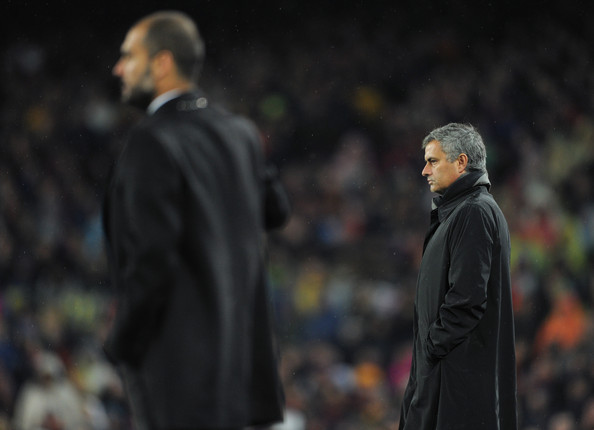
Pep Guardiola & José Mourinho

On the other hand, Real Madrid's prestige lost some points in the way. The lack of international and domestic success does not explain everything. Aside the lack of recent victories, the last decade had a negative effect on the perception of Real Madrid for several factors. First of all, the self-promotion of Real Madrid has been as profitable in terms of global marketing as damaging in terms of sympathies. The image of Real Madrid has been overexposed and, in some situations, has been seen as arrogant. The arrival of Florentino Pérez to Real Madrid was full of new messages, terms and symbolism. Florentino Pérez does not stop repeating that Real Madrid is the best club of the 20th century and, as evident as it is for most of the football fans, the constant bombing was often read as arrogant. In the same line goes messages as "this player was born to play in Real Madrid", often referring to players of a high level that seem to be designed for Real Madrid and not for anybody else. In the first stage of Florentino Pérez, the overdose of stars gave the team the initially positive and finally negative term of Galácticos. These Galácticos were a group of players that, in the right measure, won titles, but ended up seen as spoiled elitist stars without any kind of culture of effort. The overdose of Galácticos went along with the rise of Ronaldinho's Barcelona... a Ronaldinho who was labeled as too ugly to play in Real Madrid by Florentino Pérez. A joke that ended up being a nightmare for Real Madrid.

But the definitive impact has been the arrival of José Mourinho. The Portuguese coach has built big walls around Real Madrid in a prepared and constant propaganda in order to create tension in and out Real Madrid. This tension had the wished effects. While the messages got more tense, the union of the madridismo around the new project grew, but also the disaffection of the rest of the clubs. The internal message insists that the envy on the best club of the World is the reason of it, but this new slogan lose weight because of two reasons: Real Madrid never needed to repeat how good they are to be admired and, most importantly, it has been repeated in times of failures. This internal union is based in the constant search of enemies, some of them classic, but also some new. The press, the referees and even smaller rivals like Sporting or Málaga have been the victims of cheap attacks, like the one on Preciado doubting about the commitment of Sporting to beat Barcelona or the one on Pellegrini, when Mourinho claimed that he would not end up in a club like Málaga, suggesting the low level of the new club of his predecessor in the Bernabéu. To all these facts, the arrogant attitude of players like Cristiano Ronaldo, often victim of the booing in most of the stadiums of Spain, or Pepe, seen as a butcher, do not help much to the cause of the image. In fact, one could say that the level of tension created by a player, a manager or a president has a direct link with antipathies, and this is how the negative image of Sevilla is directly related with the noise and provocative attitude of their president, José María Del Nido.
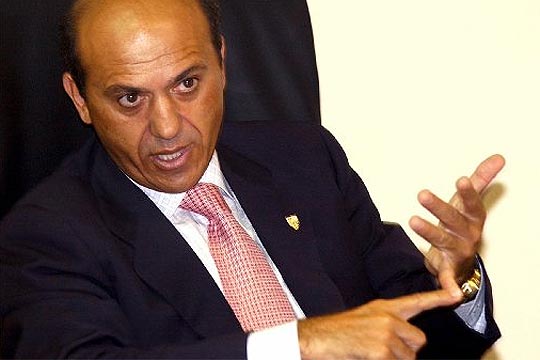
José María Del Nido, Sevilla president


Surprisingly, all these events ended up moving the roots of support on the two giants. Barcelona gets the respect and the sypathies left by Real Madrid in their new policies. The success of Barcelona and/or the Spanish NT, the soft-catalanism, the arrogant Florentinismo and the policies of tension of Mourinho made Spain more barcelonista and less madridista. As weird as it sounds.

Tuesday, August 23, 2011

Seville owed it to football

Seville is a wonderful city located in the South of Spain, in Andalusia, with a metropolitan area of 1,500,000 inhabitants. Seville is well known for their cultural patrimony and, when I refer to patrimony, I go beyond the monuments, which are gorgeous, like the Giralda or the Torre del Oro, which show the Arabic heritage of Spain, or the Cathedral, one of the most important examples of Gothic art in the whole World. When you refer about Seville, you also smell the intangible patrimony, in the music, being one of the main centers of Flamenco music, or the particular personality of their neighborhoods or the soul of their Semana Santa or Feria de Abril. Seville is one of these unique cities in the World. At the same time, Seville also give the World one of the most beautiful and hot football derbies: Sevilla Fútbol Club vs Real Betis Balompié. This derby divides the city in two. Not just the city, but also groups of friends or even entire families.

As it happened in most of the cities of Spain, football was introduced in Seville by the important British colony. The first real football club of the city was Sevilla FC, founded in the year 1905. In a famous speech, José Luis Gallegos, one of the founders of the club, said: "Every man of any social level, religious or political ideas will find their home here". Just a couple of years later, in 1907 (although they were not registered until 1909), a new club was formed in the city, Sevilla Balompié, founded by students of the Universidad Politécnica de Sevilla. The name of Balompié (football in Spanish) was intentional in order to avoid the English term. This club wore blue and white colors. This club won the first Copa of Sevilla (it is important to know that, during that time, La Liga did not exist and most of the tournaments were local or regional) in 1910 and they kept the champion condition until 1913.

But if there was an important event to understand the beginning of the rivalry, we have to go back to the year 1909. During that year, an internal social crisis in Sevilla FC had as a principal consequence that some of the managers of the club decided to leave in order to create a new club: Betis Football Club, who got the Real (royal) title by the King Alfonso XIII in 1914, when they also merged with Sevilla Balompié to found Real Betis Balompié.


Betis in their early years
The cause of the rupture that led to the creation of Betis FC was that a part of the managers of Sevilla FC wanted to sign a "worker". Since the club did not accept that "simple workers" joined the club, the part of the board who did not accept the decision left to found Betis FC. In order to understand this situation, it is important to know that, in Spain, football was a game of elites and university students, since the working-class did not have much time nor economic resources to create clubs or play that often. The social fracture of the Spain of the beginning of the 20th century was very important.

This anecdote is important to understand some of the cliches that still exist nowadays: Sevilla FC is a club of the elites (señoritos) and Betis is the club of the workers. In order to keep the cliche alive, it was also important to know that Sevilla had their social headquarters in the Sierpes street, one of the most rich of the city, and most of their initial fans belonged to this zone of the city, while Betis raised their fan base in the suburbs and working-class areas. Nowadays, this simplistic limits does not exist anymore and the growth of the middle-class in the city, the fans belong to any social class or economic level. Ironically, the large ultra groups of these clubs have opposite political tendencies... Sevilla FC having left radicals (Biris) and Betis having pro-fascist supporters (Supporters Gol Sur).

1915 was the first year Sevilla and Betis faced each other in a local cup. Sevilla won 4-3, but the game was extremely tense, with aggressive attitudes from both sides, in the pitch and in the stands, and the referee was forced to stop the game before the 90 minutes. In the same 1915, the new Federacion Sur created the Copa de Andalucia, which gathered the most important clubs of Andalucia, including clubs like Recreativo de Huelva, Español de Cadiz, Cordoba, Malaga or Real Jaen. This competition was important to have access to play the only national tournament of that era, the Copa del Rey, against the champions of other regional tournaments. Sevilla won 16 out the 23 editions played until the tournament disappeared.


First Sevilla FC badge
In 1928, La Liga was created, but none of the two clubs of Seville were in the Primera División, since it was closed for the all the Copa champions until then. The first derby in La Liga was in Segunda División in Nervión and Betis won away, although Sevilla ended up winning the title. The promotion to Primera División was not automatic and Sevilla lost the promotion game against Racing Santander.

The great development of these two clubs happened in the 1930s. Betis was the first team of Andalusia to reach a Copa final (1931), even being in Segunda División, although they lost against Athletic Club (3-1). Betis also was the first team of Andalusia to win the promotion, after they won the Segunda División in 1932. Sevilla did it in 1934. The lawyer Ramón Sánchez-Pizjuán had become the president of Sevilla FC in 1932 and is an icon, since his presidency was the most golden era of Sevilla until recent times. His administration was marked by the trust in the local youth and the healthy economy of the club, aside the triumphs.

But if there is a historical moment for Betis, it can only be the Liga of 1935. Patrick O'Connell, an Irish man who had been Manchester United captain and with a long career as coach in Spain, drove the club to their biggest achievement ever. It was April, during the famous Feria of the city, after their victory in Santader (0-5). Obviously, without TVs back then, the result was announced in blackboards in the Feria, the city festival, and half of the city was a party.


Real Betis after winning their Liga

The economic problems of Betis forced the club to sell several players to richer clubs and the coach O'Connell also decided to leave the club to join FC Barcelona. The club could not repeat the title. Meanwhile, in the other side of the city, Sevilla was struggling and visited the Segunda División again. But if there was a heartbreaking moment, it had to be the Spanish Civil War, a human tragedy that was the rehearsal of the World War 2 that was about to start too.

The Civil War had tragic consequences for Betis. In the first Liga after the war, the economic problems of the club took the team to Segunda División and, later on, in 1947, to Tercera. On the other hand, Sevilla FC were able to survive to the war in a much healthier way and lived their best era. In 1940, the club of Sánchez-Pizjuán won their first important title, the Copa, and ended up as runner-ups in La Liga won by Atlético Madrid. During this decade, Sevilla was one of the most important teams in the league and, after another 2nd position in 1943, the team of Nervión won La Liga in 1946. The team of Ramón Encinas joined historical players like Araujo, Campanal, López, Herrera and, especially, Juan Arza. This magnificent striker played for Sevilla during 15 years, scoring 182 goals in 349 games, still being their top scorer in history and the second player with more games in the first team.

The 50s was a decade of lights or darkness, depending on which part of the city you were in. Sevilla still kept their position as power of La Liga, being the best moments under the direction of Helenio Herrera from 1953 to 1957. The Argentinian coach had started to build his reputation with the 2 Ligas he gave Atlético Madrid at the beginning of the decade and took the Sevilla to the high zone of the standings year by year. In 1957, Sevilla ended up as runner-ups, only behind the mythical Real Madrid of the late 50s, which allowed them to play the recently created European Cup. In this competition, they fell in the quarter finals against the same Real Madrid.


Juan Arza

In this decade, Real Betis was surviving to the lower divisions of the Spanish football, but these years were very important of the club to create a sense of pride. It is in these times when the famous slogan "Viva er Beti manque pierda!" ("Viva Betis, despite they lost" in a very closed Andalusian accent). And it was for real, it was a dark time for Betis in terms of achievements, but the fans packed the stadium in every game and the "green wave" was famous in all Spain. Being a bético was a matter of pride in the sevillista city.

The 60s until the mid 70s were times of up and downs for both clubs. Sevilla, who had been a power in Spain during 2 decades, paid the consequence of the construction of their new stadium (the current one), designed by the same architect of the Santiago Bernabéu coliseum, Manuel Muñoz. The club was forced to sell their stars to the big clubs of Spain. The club ended up in Segunda División and the lack of stability was evident in these decades. Betis were able to return to Primera División in the year 1958, defeating Sevilla in their come back, and enjoyed good moments in the early 60s, even reaching the 3rd position in 1963, which gave them the right to play the Fairs' Cup. These were the years of Benito Villamarín, the man who was able to take the club from Tercera to Primera. But, the departure of the president Villamarín in 1965 led to an institutional crisis and a new relegation.

In the late 70s, with the arrival of democracy of Spain, also a new time was opened for both clubs. Real Betis were able to win their first important title since 1935, the Copa del Rey of the democracy (before it was called Copa del Generalisimo, to honor the dictator Francisco Franco) in 1977 against Athletic Club in the Vicente Calderón. 21 penalties had to be kicked to decide the final (see video attached). This is one of the most relevant moments in the history of Betis and some of their most legendary players belong to this team: Esnaola, Cardeñosa or Biosca. Despite they got relegated to Segunda División in 1978, the same year they played the Cup Winners' Cup, they returned soon based on players like Rafael Gordillo or Poli Rincón, who are icons of the club nowadays. The club made some fantastic campaigns, playing the UEFA Cup twice (1982 and 1984) and being the runner-ups of the fail tournament Copa de la Liga in 1986. But these years were not worse for Sevilla FC, who also played in Europe several times during the 80s, enjoying important players like Paco Buyo, Francisco, Toni Polster, Dasayev or Bengoechea. For the first time in a very long time, both clubs of the city could face each other in a similar situation and the consequence was that the derbies were hotter than ever, like the Copa clash of 1983 that ended up with punches.


Betis' Copa del Rey 1977

In the 1990s, both clubs became corporations because of the new sports law. Manuel Ruiz de Lopera bought the majority of the shares of Betis, taking the club from Segunda, where they had fell in 1991, in the year 1994. Lopera did very important investments in the club, who were able to sign stars like Denilson, Finidi or Alfonso. These team played a Copa final in 1997 against Bobby Robson's Barcelona, losing 3-2 in the extra time. In the same period, Sevilla had the opposite direction. The signing of Bilardo was important to return to Europe and they shocked the whole World with the signing of Diego Armando Maradona for the 1992/1993 season, right after the ban the legendary player suffered due to his problems with drugs. But aside the anecdote, since Maradona did absolutely nothing in Sevilla, it is important to highlight that players like Simeone, Zamorano or Suker started to build their prestige there and homegrown idols like Reyes and Jose Mari gave their first steps in the first team. But the club paid the excessive signings and ended up in Segunda División at the end of the decade, along with Betis, who were also unable to keep the cathegory.

The new century brought both clubs back to Primera División. Lopera was able to build an important Real Betis once more. In 2004, the club earned their place in the UEFA Cup very near the Champions League spots. The following year was a historical one: the club won the Copa del Rey in 2005, in the Calderón, defeating Osasuna in the final (2-1), and ended up 4th in La Liga, which gave them the right to play the Champions League, being the first club of Andalusia to play under the new format.

Sevilla's path was more slow, but also more solid. The first years of the decade were not very good, but the good work in the youth academy, the solid economic management of José Maria del Nido and the eye of Monchi in the market allowed them to build a team that had a constant growth. In the years 2004 and 2005, Sevilla played the UEFA Cup after several years without visiting Europe, but also had solid seasons in La Liga. In 2006, Sevilla reached the top. Juande Ramos replaced Joaquin Caparrós and took the club to win their first European title. It was the historical UEFA Cup triumph against Middlesbrough by winning 4-0 in Eindhoven (see video attached). But, if this was not enough, they repeated the following year, winning their 2nd UEFA Cup against Espanyol in Glasgow in the penalties. Sevilla had kept a healthy economy after the problems of the 90s and the transfer of players like Jose A. Reyes, Julio Baptista or Sergio Ramos allowed them to fund the construction of a super-team, with players like Daniel Alves, Luis Fabiano, Frederic Kanoute, Enzo Maresca or Andrés Palop, always well escorted by the home talents, Jesus Navas or Antonio Puerta. This team also defeated Ronaldinho's Barcelona in 2006 in the European Supercup to add another continental title and won a Copa in 2007 to achieve a historical Doblete (victory over Getafe, 1-0) in the Bernabéu.


Sevilla's UEFA Cup 2007
These decade will also be recall for some sad episodes in the derbies, which crossed the line from hot to violent, especially in the stands. As a consequence, both clubs have seen their stadiums closed and more than one fan or employee has ended up in the hospital in very sad events.

In the last part of the last decade, Betis has been involved in lots of problems, due to the poor (if not corrupt) management of the owner Lopera, which took the club to be under administration and meeting of creditors. The club got relegated and spent two seasons in Segunda División until their return last year. On the other hand, Sevilla has remained on top, winning the Copa in 2009 again.

This season we will enjoy the Sevillian derbies again, probably one of the most beautiful games you can watch in the whole World. Seville owed it to football.