Showing posts with label La Liga. Show all posts

Monday, October 24, 2011

From Granada to Udine: How to make money in football

Granada CF has always been a humble club. The club of Andalusia has always been a humble club which, even though it enjoyed some more or less successful periods in Primera División during the 40s, 50s and 70s, has always been a so called equipo ascensor, that is "elevator team". One of these clubs that jump from one division to another. Something changed in 2009, when Quique Pina convinced Giampaolo Pozzo, Udinese's owner, to buy shares of the club.

Who is Quique Pina? Quique Pina is a former player of Tercera División teams that had a dream: to have his own football club. In the year 1999, Quique Pina starts from scratch, founding Ciudad de Murcia, a club located in the city of Murcia. The club starts in the lowest division, the Group B of the Territorial Preferente, with four divisions over them. Quique Pina started to show his talent to find interesting players that help the team to get promotions. In only one year, Ciudad de Murcia reached the Tercera División. Quique Pina is able to convince a former Primera División player like Idiakez and other clubs of the province to help to build a squad via loan agreements. The results can not be better and the team promotes to Segunda División B, the Spanish third division. Pina kept reaching similar agreements and in a matter of two years, the club reached the Segunda División. This promotion was significant, since the Segunda División B is not a joke anymore. B teams of the Primera División clubs and historical teams of the Spanish football play in this national division.

Enrique Pina

Ciudad de Murcia only needed two years to promote to Segunda División, leaving in their way historic clubs of the region, like Cartagena FC, and meeting the traditional club of the city, Real Murcia. In this 2004, the situation was weird, Real Murcia holds the love of the local fans, it has been representing the city since 1919 and, suddenly, a new club without fan base and tradition was sharing stadium and division with them. With Real Murcia in serious financial and economic trouble, Ciudad de Murcia becomes a real threat for the traditional club of the region. In these years, the goal is to stay in this division, but they do it wisely. Players like Dani Güiza are signed from important clubs like FC Barcelona to get a name and be sold for important figures in just two years. After two years in Segunda, Quique Pina built a team to promote to Primera División and, in the following two seasons, the team ended up in fourth position, very near the promotion.

In the year 2007, a change in the rules of football allows to sell the position of a club in a certain division. This is the beginning of the contacts of Quique Pina with the city of Granada. Pina sold the club to a Granada businessmen and the club, without fan base (the usual image of the Nueva Condomina was a stadium full of empty seats), changes its name to Granada 74. Without Quique Pina and without the support of the city (in a similar case, this Granada 74 was an experiment, while the love of the city was for Granada CF), the team does not have a future and gets relegated.

Gino Pozzo

The relationship between Quique Pina and the Pozzo family comes from long ago. Gino Pozzo, Giampaolo's son, is a football agent and met Quique Pina in an operation. As a consequence of it, their relationship started and, in these years, Ciudad de Murcia and the Pozzo family reached eventual agreements. Once Pina had left Ciudad de Murcia, he also joined the game of the football market. In the summer of 2007, as an example of it, Pina gives the Pozzo family the chance to sign a couple of Chile players, Alexis Sanchez and Mauricio Isla, at a very good price. The results are so good for both sides, that the contacts grow.

In 2009, Gino Pozzo, who lives in Barcelona, and Quique Pina started to work together in the ownership of a Spanish club. The Pozzo family offered 4M euros to buy RCD Espanyol, although the operation does not work. In the same summer, Lorenzo Sanz, former Real Madrid president, sells his ownership in the historical Granada CF and the Pozzo family sees their chance to put a feet in the Spanish land. The Pozzo's buy Granada CF, placed in Segunda B, to clear their debt. As a result of this operation, Quique Pina gets named administrator of the club.

Udinese & Granada


With the financial help of the Pozzo family and the good eye of Enrique Pina in the lowest divisions, Granada only takes one year to return to Segunda División. It was last summer when the links of Granada and Udinese get more obvious. With the club in Segunda División, Gino and Giampaolo Pozzo consider that Granada would be the perfect test ground of young players with potential to grow in competitive football. Udinese, who are fighting for big goals in the Serie A, have a very competitive squad and the young talented players who are not ready to play with the first team need minutes to grow. Granada is their destination. Players like Alex Geijo, Nyom, Dani Benitez, Jaime Romero and others join the club as platform to grow and as test for them in competitive football. The deal can not be better. As the players gain value with their fantastic performances, the club takes advantage of the support of a top European club to be a power in Segunda División. Only one year again. One year is what Granada needed to return to Primera División for the first time since 1976, 25 years later.

The formula of Quique Pina and the Pozzo family work. Their good eye in football allowed them to but cheap and sell with big revenues, while their clubs remain healthy and successful. While football is a ruin business in all the World, Pina and Pozzo show how things are done in the financial and sport aspects, proving that it is possible to mix success and business.

Tonight, Granada CF receive the visit of FC Barcelona in their home, Los Cármenes, and Udinese Calcio is the leader of Serie A.

Thursday, October 20, 2011

The Spanish youth on sale

The poor economic and financial situation of Spain, in general, and in football, in particular, are opening possibilities of business to vultures in search of opportunities. Since one month ago, an investment fund called Doyen Group (do not look for it in google, you will find absolutely nothing) has been reaching supposed sponsorship agreements with some clubs of Primera División, like Sporting, Getafe and Atlético Madrid, that seems to be extended to other clubs, like Espanyol or Sevilla in Primera División and Deportivo in Segunda, who also signed agreements with them. For now, these agreements are made for figures that go from 100,000 to 150,000 euros.

Some sources claim that Doyen Group is an English fund with Portuguese capital, some other sources suggest that the Russian money is behind this strange fund. But what is the reality of this investment fund? It is evident that the intentions of Doyen Group go beyond the simple sponsorship agreement, after all they are not willing to sell or promote any product, service or event. Today, the Spanish newspaper El País explains the intentions of this fund.

This fund wants to invest in the ownership of the rights of young talents. As it is well known, the South American market of young players is saturated of investment funds, scouts and agents, especially in the main "factories" of talent, Brazil and Argentina. But the success of Spain in football, not only in the first team of the national team, but also in the youth levels (Spain won the U-21 and U-19 Euro tournaments last summer, as no one else has achieved previously) has caught the attention of this fund. In recent times, Doyen Group has been scouting and analyzing the youth academies of several Spanish clubs and, convinced by the magnificent health and methods, has decided to invest in players, all of them under 24, who have potential to increase their market value in mid or short term.


Doyen Group offers different possibilities in their offers and this flexibility seems convincing for several clubs who are needed of money in these times of crisis. The fund's offer for the "important" clubs is to give them the chance to count on established players who are out of reach for these clubs, given their poor financial state. At the same time, the more humble clubs are getting offers for the total ownership of their best young players with the chance to count on them until a transfer to a bigger club makes possible to make the business profitable for the fund, real owner of the rights of the player. In both cases, the percentage of participation in the ownership of the rights are open to negotiation. The fund also gives these clubs the chance to act like platforms, mainly in international movements. The fund loans them a player for a certain time in order to give the "asset" the possibility to show his talent in La Liga and raise his value for future transfers.

For now, the clubs only admit sponsorship agreements, like Sporting, who already made an official statement on this defending the solvency of this fund, although admitting that this deal could be extended... without more explanations. Atlético Madrid, who also wear the name of the group in the sleeves of their shirt, has made official this agreement, which would also affect the rights on the elite boxes and the static banners of the stadium.

What Doyen Group proposes is what is called the "Third Party Ownership". A legal formula that is accepted in countries like Turkey, Portugal or Spain (although it has never been used in the Spanish clubs), but forbidden in the Bundesliga or the English Premier League since 2007. The Spanish clubs see this agreement as a solution for these times of drought. But this is what we could label as "bread for today, hunger for tomorrow". As we claimed in previous occasions, the Spanish football needs to be reviewed from top to bottom. The league with the clubs with the most important international achievements must look for solutions that avoid the mortgage on its assets. What Doyen Group propose is to make La Liga a feeder league for richer European clubs. Even though it is true that these clubs are in truly need to find funds for today, they must never forget the future. To put the youth academies in the hands of this kind of funds only serves to anticipate future incomes, but it is unlikely that this anticipation makes the investment on youth academies more profitable in the long term.

Fernando Llorente in the youth level


As a consequence of these agreements, we would see several Primera División clubs acting as mere platforms or feeder clubs for the giants of football, going in the opposite direction of where they are supposed to go. A policy that would only make the gap between "big" and "humble" clubs bigger and bigger and, what it is even worse, cutting the connection of the club and its community, represented in the local talents, the most loved and respected players by the fans.

The economic and financial problems of the clubs are serious, there is not doubts about it. But these times of crisis also require long term perspective. There are several ways to face this situation and La Liga, represented by the Liga de Fúbtol Profesional (LFP), must decide: do we want a top league or do we want to feed the Premiership and the Bundesliga with our best talents? Lion or mouse? It is sad to see that the Spanish youth is on sale. Seriously, where are we going?

Monday, October 10, 2011

Spain is more blaugrana and less madridista

This morning, any madridista who bought one of their favorite newspapers, Diario AS, found a surprising headline: "El Madrid se queda solo" (Madrid are left on their own). In the cover of the newspaper, they also inform that Real Madrid gets more rejection in San Mamés (Bilbao), Reyno de Navarra (Osasuna), Anoeta (San Sebastián) and the Calderón (Atlético Madrid) than in the Camp Nou (Barcelona). They also highlight that the antibarcelonism in Madrid is bigger than the antimadridism in Barcelona. Aside this focus on Real Madrid, AS also shows that Rayo is the most appreciated club in Spain, while Sevilla gets the biggest rejection, while Valencia, Villarreal, Málaga and Granada have a good image.

All these headlines are based on a survey done by the agency Ikerfel for AS among fans of the Primera División clubs. It is also important to put the results into a context. 8 years ago, a survey done by the Generalitat (Government of Catalonia) showed that Real Madrid enjoyed more sympathies than FC Barcelona with a huge margin of a 20%. The last survey of this kind was done by CIS (the institute of sociological studies of the Government of Spain) in the year 2007 and this margin of sympathies had been reduced to 7 points. Nowadays, even though the ones who pick Barcelona over Madrid as their main favorite club is just a 1% (which is irrelevant, considering the margin of error), the difference grows to a 7% in favor of the blaugranas when it comes to secondary sympathies.

Diario AS cover - Oct 10, 2011

The survey starts focusing on sympathies, asking for the favorite club and secondary sympathies. In this aspect, we already stated that Barcelona and Real Madrid show a similar amount of fans (18% and 17% respectively). Atlético Madrid (8%), Athletic (7%), Betis (7%) and Valencia (6%) get expected results, which do not differ much from the last survey done in 2007. Back then, Real Madrid got a 32.8%, Barcelona a 25.7%, Valencia a 5.3%, Athletic a 5.1%, Atlético a 4.3% and Betis 3.3%. It is important to highlight the differences: in this new survey, the sample was the Primera División clubs while, 4 years ago, this limit did not exist.

But even with these differences, probably the most relevant fact is the growing sympathies of Barcelona as secondary option for football fans. While Real Madrid used to be the second choice of the Spanish fans back then (with Barcelona very near them), this time Barcelona appears as second or third option for the 26% of the fans of the Primera División clubs, while Real Madrid's percentage fall to a 20%. These secondary option is what makes the difference.

Popularity index. As.com

But in football, aside the sympathies, the antipathies are usual too. There is a thin line between love and hatred and football could not be different. The bigger the club is the bigger the feelings around them are, in one way or another. The most admired clubs usually are the most hated and this is what the survey shows. Real Madrid is the most hated club by the 39% of Primera fans, while Barcelona gets the opposition of a 30%. If we add secondary hatred options (that is, eliminating local and direct rivalries), the percentage grows against Real Madrid. The 51% of the Primera División fans claim to be antimadridistas, while this percentage gets reduced to a 40% in the case of those who label themselves as antibarcelonistas. Sevilla's (30%) and Atlético's (29%) image isn't much better.

Unpopularity index. As.com

The following part of the analysis is based on the differences among the fans of the different clubs. Based on this, Real Madrid is chosen as the club with more sympathies in 7 different stadiums (not counting the local team, of course). Some of the results are expected, like the support among the Betis fans, since both clubs share recent legends like Gordillo, Poli Rincón or Alfonso; or Racing Santander, for similar reasons, after all Gento was born in a town near Santander and both clubs have been carrying a really good relationship through the years, which includes transfers in both directions, as it shows the cases of Munitis or Canales in recent years. Other results are expected for different reasons, Real Madrid also holds sympathies in clubs of the region, like Getafe or Rayo Vallecano, since these clubs are in the historical area of influence of Real Madrid. Probably, the most unexpected is the support of the sevillistas, but the noise created by the president Del Nido seems that did not hide the big madridismo of the city of Seville.

In the case of FC Barcelona the sympathies are also expected in some cases. Barcelona gets a clear support among Athletic, Real Sociedad or Osasuna, that is, the Basque provinces. Despite there are some historical rivalries, especially with Athletic, all these clubs have something in common, their capacity to be a channel for the national aspirations of the communities they are in. Despite the historical reasons of each nationalism is different, the national feeling, either Basque or Catalan, recognize each other's identity and both definitely share similar tools to reach similar goals. In the cases of Valencia and Mallorca, FC Barcelona may seen with good eyes due to cultural reasons, since there is a common culture among Catalans, Valencian and Mallorquin people, although there is also a good share of animadversion in these regions against the so-called pan-catalanism, which is shown in the results too. Aside the socio-political links, it was also to expect the pro-barcelonisme in Gijón. Sporting and Barcelona share lots of legendary players for both clubs in the last decades: Quini, Iván Iglesias, Abelardo, Luis Enrique and now David Villa. The case of Málaga may be temporary. It is true that Barcelona has a solid base in most of Spain, including Andalusia, but these results may show the late rivalry between Málaga and Real Madrid... or maybe between Pellegrini and Mourinho.


For - against by fans of each club. As.com

When it comes to hatred, the madridistas have it clear: they hate Barcelona with passion (97%). It is evident that the hatred goes both ways and something similar happens in Barcelona, but the results show that the antimadridismo in Barcelona is lower than the antibarcelonismo in Madrid. There is an interesting fact: Real Madrid gets more hatred among the Athletic, Real Sociedad, Osasuna and Atlético Madrid fans than among the Barça fans. In the case of the antimadridismo, there are evident cases, aside the mentioned in Barcelona. Real Madrid has been an eternal rival of clubs like Atlético Madrid or Athletic Club. The political factor has an effect in other cases, like Real Sociedad or Osasuna. But there is a growing antimadridismo in new areas. The most evident cases are: Valencia, Málaga and Sporting. Valencia used to have a really good relationship with Real Madrid, but in the late 90s, the way Real Madrid used to sign the star of Valencia, Pedja Mijatovic, broke this friendship. The cases of Málaga and Sporting probably have a lot to do with the recent events, especially with the arrival of Mourinho and his attacks on these clubs and their prestige and commitment.

In the case of the antipathies on Barcelona, aside the evident case of Real Madrid, it was easy to expect the case of Espanyol, given their centenary rivalry. Out of these evident cases, Barcelona does not enjoy the sympathies of fans of the zones of influence of the madridismo: Getafe, Rayo and Santander. Aside them, there are cases of classic antibarcelonismo in Granada, recently promoted, and the secondary antipathies that probably have something to do with political reasons, as in Seville (both clubs) and Valencia/Mallorca (where catalanism and anticatalanism is polarized).

Aside the two giants, the results show classic rivalries, mainly local or regional, like Betis-Sevilla, Athletic-Real Sociedad, Málaga-Sevilla, Valencia-Levante, Osasuna-Zaragoza; and new kind of rivalries, due to recent polemic events like Getafe-Racing (due to the Copa semifinal of a three years ago) or Mallorca-Villarreal (due to the elimination of Mallorca from the European competitions as a request of Villarreal for unpayments).

Relation sympathy/antipathy. As.com

Mixing all this information, the picture shows that Sevilla and Real Madrid get the worst love-hatred differencial, by an important margin, while Rayo Vallecano, Málaga, Valencia and Villarreal get the best image among the Primera División fans. How can we interpret all these information?

There are several factors that have an influence when it comes to understand this new scenario. Real Madrid have traditionally been the club of Spain and they always carried this flag with pride while their international success always backed this position. On the other hand, as we already mentioned in the entry about football and nationalism, clubs like FC Barcelona and Athletic Club have traditionally been seen as representatives of their national and identity aspirations.

But in recent times, FC Barcelona rose as new power in Spain and Europe with a very particular style. It is evident that success goes along admiration. The current admiration on Barcelona is based on their domestic and international triumphs and, as a consequence of it, they gather the support that the winners use to have. But there are other factors that help to understand this support beyond success. While the main reason of hatred of Barcelona has always been the catalanism of the club, the fans of every club of Spain recognize the essential importance of the Barcelona players in the success of the Spanish national team in the last years. Despite Barcelona never rejected the catalanism in all these years, the average fans found a link with players like Xavi, Iniesta, Puyol, Piqué or Villa, independently if they are Catalan or not. The Spanish NT is often seen as an extension of Barcelona, not just when it comes to players, but also in the style. At the same time, the new Board of Sandro Rosell has definitely lowered the political tensions inside the club, which were much more evident with Joan Laporta. The club remained catalanist but without the noise of the Laporta era.

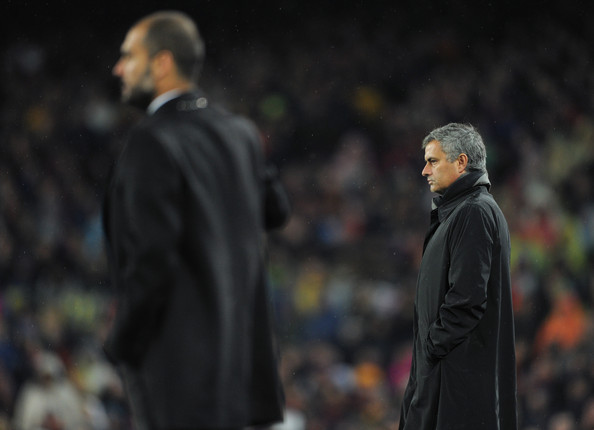
Pep Guardiola & José Mourinho

On the other hand, Real Madrid's prestige lost some points in the way. The lack of international and domestic success does not explain everything. Aside the lack of recent victories, the last decade had a negative effect on the perception of Real Madrid for several factors. First of all, the self-promotion of Real Madrid has been as profitable in terms of global marketing as damaging in terms of sympathies. The image of Real Madrid has been overexposed and, in some situations, has been seen as arrogant. The arrival of Florentino Pérez to Real Madrid was full of new messages, terms and symbolism. Florentino Pérez does not stop repeating that Real Madrid is the best club of the 20th century and, as evident as it is for most of the football fans, the constant bombing was often read as arrogant. In the same line goes messages as "this player was born to play in Real Madrid", often referring to players of a high level that seem to be designed for Real Madrid and not for anybody else. In the first stage of Florentino Pérez, the overdose of stars gave the team the initially positive and finally negative term of Galácticos. These Galácticos were a group of players that, in the right measure, won titles, but ended up seen as spoiled elitist stars without any kind of culture of effort. The overdose of Galácticos went along with the rise of Ronaldinho's Barcelona... a Ronaldinho who was labeled as too ugly to play in Real Madrid by Florentino Pérez. A joke that ended up being a nightmare for Real Madrid.

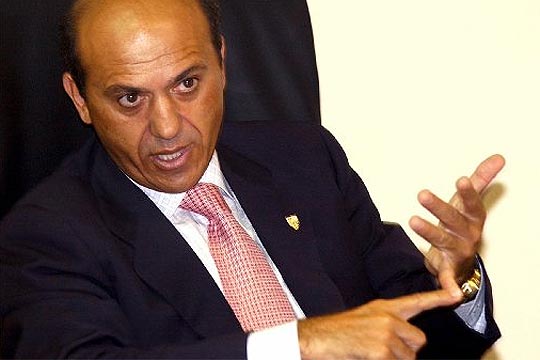
But the definitive impact has been the arrival of José Mourinho. The Portuguese coach has built big walls around Real Madrid in a prepared and constant propaganda in order to create tension in and out Real Madrid. This tension had the wished effects. While the messages got more tense, the union of the madridismo around the new project grew, but also the disaffection of the rest of the clubs. The internal message insists that the envy on the best club of the World is the reason of it, but this new slogan lose weight because of two reasons: Real Madrid never needed to repeat how good they are to be admired and, most importantly, it has been repeated in times of failures. This internal union is based in the constant search of enemies, some of them classic, but also some new. The press, the referees and even smaller rivals like Sporting or Málaga have been the victims of cheap attacks, like the one on Preciado doubting about the commitment of Sporting to beat Barcelona or the one on Pellegrini, when Mourinho claimed that he would not end up in a club like Málaga, suggesting the low level of the new club of his predecessor in the Bernabéu. To all these facts, the arrogant attitude of players like Cristiano Ronaldo, often victim of the booing in most of the stadiums of Spain, or Pepe, seen as a butcher, do not help much to the cause of the image. In fact, one could say that the level of tension created by a player, a manager or a president has a direct link with antipathies, and this is how the negative image of Sevilla is directly related with the noise and provocative attitude of their president, José María Del Nido.

José María Del Nido, Sevilla president


Surprisingly, all these events ended up moving the roots of support on the two giants. Barcelona gets the respect and the sypathies left by Real Madrid in their new policies. The success of Barcelona and/or the Spanish NT, the soft-catalanism, the arrogant Florentinismo and the policies of tension of Mourinho made Spain more barcelonista and less madridista. As weird as it sounds.

Sunday, September 18, 2011

La Liga: Week 4 review

This Liga weekend had a change in the top position. The surprising defeat of Real Madrid in Valencia against Levante gave Valencia the first position in the standings in the week Barcelona visit Mestalla. The culés wanted to leave the bad results of the last week behind and Osasuna paid the bill. The Catalans showed their best version, beating the team of Navarra with a historical 8-0. Sevilla, Atlético Madrid and Málaga keep climbing in the standings, improving their image and showing that they are ready to fight for big goals this season. Remarkable hat-trick by Falcao. On the other hand, Villarreal and Athletic keep disappointing their fans with bad football and, as a consequence, bad results. The surprise of La Liga so far has a name, Real Betis, who share the top position with Valencia after 3 victories in 3 games. The "Spanish-Scottish" league is led by Valencia and Betis.

The weekend started with Valencia visiting Gijón aiming to improve the image shown in the Champions League in order to achieve the 3rd consecutive victory this season. Mission accomplished: Valencia looked solid as in the last games and the individual performances of Roberto Soldado and the goalkeeper Güaita made the difference. The Ché team was the best in the first half and this superiority had its reflection in the scoreboard. Soldado made the goal of the victory and Jonas was as active as usual. In the 2nd half, Valencia mainly defended the advantage against a Sporting that put all the required effort, but the Asturian team lack power in attack and this fact was a liability for them to tie the team. Valencia finishes the week leading the standings.


At the same time, Villarreal got surprised by Granada in their visit to the city of the Alhambra. The vilarealenses are showing a worrying image that gets its translation in poor results, in Europe and La Liga. Granada were willing to clean the ugly face shown in their last game against Málaga and their level of commitment and effort was high. On the other hand, Villarreal imposed a very slow and imprecise football that ended up being their punishment. Ironically, it was Uche, on loan from Villarreal, who punished his "owners". Besides, Rossi missed a penalty in the last minutes, which costed them the game. The alarms ring in a broken Villarreal.

In Palma, Málaga gave another step forward towards the top positions. Málaga played like a big team, controlling the match  and never rejecting to carry the weight of the game on their shoulders. Málaga is a team with lots of resources and their defense gave them the solidness they needed to keep their rivals under control. On the other hand, once again, Mallorca was very limited in their football and they were never a threat. Málaga won like a big team, without big efforts, as if it was a matter of gravity. Málaga keeps climbing.


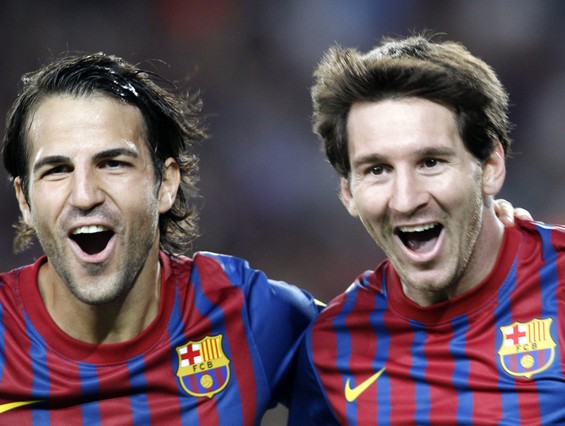
On Saturday, Barcelona had a test against Osasuna. After a week of "mini-crisis", the eyes were on the reaction of Guardiola's team... and what a reaction. The Catalans were willing to send a message and they surely did it. Since the very first moment, Barcelona was in the perfect version and the 3-4-3 of Guardiola worked smoothly. The Cesc-Messi connection was sublime; Villa and Alves were breaking in the wings; Thiago, Busquets and Xavi controlled the game; and the captain Puyol was back in the team. In 45 minutes, Barcelona had scored five. The second half was meaningless, with a powerless Osasuna willing to finish the game as soon as possible and Barcelona enjoying its own party. The doubts are cleared... at least, until the visit of Mestalla this week.

The games of Saturday were closed by Sevilla and Real Sociedad. The Basque team visited Nervión with the epic draw against Barcelona in mind. Even though the surprises of this season, Illarramendi and Agirretxe were left on the bench, Real Sociedad was serious in defense waiting for their chance, but the good attitude and effort of the sevillistas made the home team be superior. It had to be Kanoute, a living legend of the sevillismo, who decided the game with a classy execution after the assist of his partner Negredo. Marcelino's Sevilla won the game and the new project keeps looking good.


The Sunday morning game was a derby of the South of Madrid between Rayo and Getafe. Both clubs represent working-class zones and it is the first time they meet in Primera. The difference was the attitude and the illussion of the visiting team. Since the first moment, Rayo was plugged to the game and scored an early goal that ended up being decisive. The 0-1 was short for the visitors, who were the best team during all the game and enjoyed enough chances to have a more comfortable victory. However, Getafe must analyze their first games in order to improve in the near future, 1 point out of 9 is a very poor record.

Zaragoza got the first victory of the season at home against Espanyol. The zaragozistas did not show a great level of football, but their commitment and effort was awarded by the late goal of Luis García. That was the irony of the game, the ex-perico and former captain of the visitors was decisive with his two goals. Luis García could have given his team the victory sooner, but Christian Álvarez played a good again and saved a penalty. Espanyol gets the 2nd zero in away games, an aspect to improve for the Catalans.


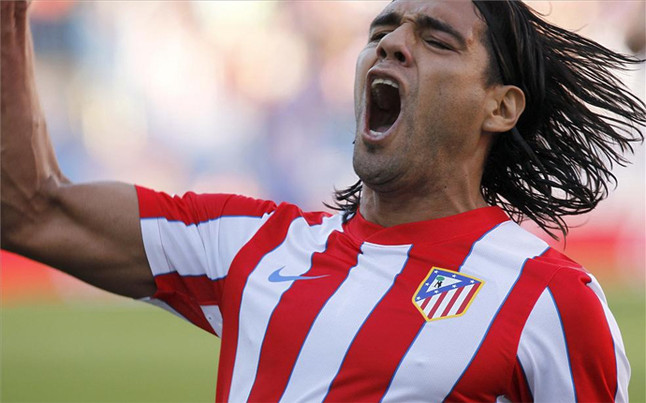
The Calderón was full of confident fans this afternoon. Despite the bad results of the first Liga games, the good image shown in these matches and the European victory made the atléticos show up in the stadium to support the team. The important news of this game is that, if anyone had doubts about it, Falcao is the new hero of the colchoneros. The Colombian player was a constant pain for Racing Santander and scored a hat-trick in his second appearance in the Calderón. But aside the already known attacking power, Atlético enjoyed the associations in midfield, where Mario Suárez, Diego and, especially, Turan made their team play nice, smooth and efficient football. Easy game for a rising Atlético.

The surprise came late in the afternoon. Levante surprised Mourinho's Real Madrid... once again. If last year Real Madrid could only tie in the Ciudad de Valencia, this time Levante were also able to be superior enough to win the game deservedly. Mourinho left Cristiano Ronaldo, doubtful all the week, and Özil on the bench and Real Madrid definitely missed them. Even though the madridistas were enjoying a higher ball possession and were dominating the game, they did not enjoy important chances. But a decisive fact was the red card for Khedira after a brawl that reminded everyone the mess of the Supercopa games. Real Madrid had to play with 10 for almost one hour and never had oxygen enough to pressure their rivals. On the other hand, Levante were very dangerous in the counters during all the second half and, in one of these chances, Kone scored the surprising goal of the victory for the levantinistas. Real Madrid got lost in direct football and useless wars, showing a desperate image and not much football. This is the first defeat of Real Madrid in Liga this year.


The game that closed the weekend was the visit of Real Betis to La Catedral San Mamés. One week later, it seems that Bielsa's players did not learn the lesson of last weekend. The Basques did not wake up with the game already started and Betis got a 0-2 in the early minutes of the game. Since that moment, Athletic pushed and pressured their rivals, but the leones had to swim against the flow, with Betis looking dangerous in the counter. The goal of De Marcos made the home fans believe in the comeback, but Salva Sevilla scored a penalty after a handball of the same De Marcos right before the half time. In the second half, Athletic put more heart than head, but aside the usual impulse of Athletic at home, their level of football was not enough against the defensive discipline of Betis. The Andalusian team could have killed the game in one of their counters, but Athletic found a late goal to believe in the last minutes. It was not enough, Betis win their 3rd game in a row in their return to Primera and Athletic showed a powerless image, since a team with so much football can not leave everything in the hands of pure attitude. The home fans showed their anger in the booes after the end of the game. Disappointing Athletic, brilliant Betis.

Monday, September 12, 2011

La Liga: Week 3 review

Ironically, after two weeks of talking about the bipolar league and the supposed huge difference of the two giants with "the rest", La Liga lived its first shock this weekend. A Spanish newspaper claimed that the so-called "FIFA virus" has a kind of balancing effect in La Liga. Perhaps it is pure speculation, but Barcelona dropped points in San Sebastián against Real Sociedad and Real Madrid had to sweat more than they normally do in order to defeat Getafe at home. Let's analyze the week.

The weekend started with a Real Sociedad-Barcelona. Even though it was true that Barcelona lost in Anoeta last year, the context was very different this time. Last year, Barcelona visited San Sebastián with La Liga in their pockets and the result was meaningless. This time, this visit was earlier in the season. Guardiola surprised with a lineup with lots of changes, including the missing of Messi in the initial lineup, but the team did not seem affected by this fact. Barcelona started like a hurricane and, after 15 minutes, the Catalans were 0-2 up in the scoreboard. Everything started to get wrong when Alexis Sánchez got injured after an ugly tackle, which will make him be out of the team during the next two months. But the disaster happened after the half time. Barcelona "went to sleep" and Real Sociedad only needed 7 minutes to tie the game again. Despite having all the second half to win the game, Barcelona even struggled to get the point. Impossible to know if it was relax or lack of motivation or the unrecognizable lineup or tiredness for the already mentioned "FIFA virus" or everything at the same time, but Barcelona dropped points early in the season again, as it seems a common trend in recent years.

Disappointing Barcelona

Real Madrid started their game knowing the result of Barcelona and, in fact, they were plugged since the very first moment. Benzema advanced his team in the scoreboard, but this initial goal was not an open door for an easy beating. Quite the opposite, Real Madrid lost the control of the midfield and Getafe took advantage of it to tie the game. In the second half, Real Madrid recovered the domination and, after a huge error of the referee, who awarded a penalty for the madridistas in a foul that clearly was out of the box, Ronaldo scored the second for Real Madrid. This goal gave Real Madrid the calm they needed and Benzema seemed to sentence the game with the their goal. But Getafe did not surrender and Miku scored his second goal of the afternoon. It is not that Getafe threatened much Casillas' goal, but the result was tight enough to leave the game open, until Higuain scored the fourth for Real Madrid in the last minutes. Real Madrid survived to this game, without showing an impressive image, but achieving three important points that allow them to stay on top.

The remaining Saturday games were quite entertaining. In Vila-real, the home team received the visit of Sevilla. The sevillistas started really strong and showing a very good image. In the 23', Perotti was denied a goal after Villarreal's goalie, Diego López, tackled him down inside the box. Red and penalty for Sevilla, which was not converted in the first attempt by Negredo. However, the same Negredo got the bounced ball to score the first for Sevilla. But far from disappearing, Villarreal found strengths in the minority to play a fantastic and serious game. Rossi tied the game in another penalty and, already in the second half, Marco Ruben advanced the Yellow Submarine. The home team only lacked oxygen in the last minutes of the game, but Sevilla could only draw in the last minutes. Bittersweet result for both teams considering all the circumstances.

Soldado, captain and leader


In Mestalla, the game of the week was Valencia-Atlético Madrid, one of the classics in La Liga. The game was dinamic, intense and beautiful to watch, with both teams that never rejected to look for the victory. The match was an interesting come and go that was won by Valencia for two reasons: first of all, Valencia looked more solid in the movements and tactical approach, while Atlético showed they still are a team under construction, with lots of new players in the lineup. Another reason was Guaita, the valencianista goalkeeper was excellent, stopping every chance of their rivals. And, of course, it is a must to name Roberto Soldado, new captain and leader, the new bat of Valencia, who executed Atlético. Valencia already won 2 games this season, while Atlético, despite the good image, still looks for their first victory.

Already on Sunday morning, Betis made their debut at home against Mallorca. As it happened in their first Liga game, Betis was the best and most ambitious team and football was fair with them, since the beticos were finally able to open Aouate's goal when the game was dying. But the short 1-0 should not fool anyone. Betis was superior and the scoreboard was not more comfortable thanks to a great Auoate, who did not hide the bad game of his team.

Roberto stopped an important penalty to win one point


The games on Sunday afternoon were clashes among teams that are supposed to fight to stay in Primera next year and they clearly showed why. In Santander, the 0-0 reflects the reality, a game where the Racing was completely unable to threaten its rival and a Levante that completely refused to look for the victory. In the last minutes, when Racing were having their best minutes, Diop (Racing) was sent off and, despite the last impulse of a Levante with superiority on the pitch, the result did not change. At the same time, in Vallecas, Rayo made their debut at home in Primera. The vallecanos tried it all and their coach Sandoval was brave in the plan. The good attitude of Rayo was opposed to the mean plans of Aguirre's Zaragoza. Rayo even enjoyed a penalty to win the game, but Roberto stopped it. Also remarkable the error of the referee that disallowed a legal goal by Rayo in the last minutes, which would have given the home team the victory. In Pamplona, Osasuna confirmed the good image shown in the Calderón 15 days ago and were very superior against a Sporting that will need to improve soon. Two early goals allowed the osasunistas have a calm game. Only at the end, Barral scored the final 2-1 in a huge error of Osasuna's goalie Andrés, but the result was fair with the image shown by both teams.

The final game on Sunday was played in Cornellà-El Prat, another classic in La Liga: Espanyol-Athletic. The expectations on Bielsa's Athletic are becoming doubts, because this is what his team showed yesterday night. Espanyol won, because they were superior in the boxes, where the games are won. The easy summary: Sergio García toyed with Athletic's defense with 2 goals of a smart striker and Cristian Álvarez was a nightmare for the forwards of Athletic during all the game. Athletic showed good concepts for moments and there will be time to improve, but the second goal of Espanyol showed lack of concentration in the defense of Athletic, an unforgivable error, which costed them the 3 points.

Sergio Garcia celebrates 


Tonight, only a few minutes ago, the Sheikh's Málaga had the chance to improve the bad image shown in Sevilla... and surely they did. The malaguistas showed no mercy of the newly promoted Granada and crushed them in a fantastic game. Cazorla was not only the engine, but also the executor, scoring two goals, along with the pair also scored by Joaquín. Granada was not a rival for a growing Málaga, who will have to confirm this improvements in following weeks against bigger bulls. Granada better finds for fast solutions for the poor image shown so far or their stage in Primera will be very short.

Monday, September 5, 2011

Pichichi: The myth

La Liga just started and the best strikers of La Liga compete to win the Pichichi award, the top-scorer award given by the sport newspaper Marca. Cristiano Ronaldo, Leo Messi, Radamel Falcao, Fernando Llorente, Giuseppe Rossi, Roberto Soldado... all of them and some others will try to write their name in golden letters in the history of the Spanish football. Probably some of you already know that Pichichi was an Athletic's forward in the 1910s and the bust that is located in San Mamés since 1926, where every club in invited to leave a bunch of flowers in their first visit to La Catedral of the Spanish football. This is the story of Rafael Moreno Aranzadi, Pichichi.

Rafael Moreno was born in Bilbao, on May 23rd 1892, in the street Santa Maria, 10. His family belonged to the middle class of Bizkaia at the end of the 19th century and his father was a prominent lawyer and secretary of the City Hall of Bilbao. He was relative of the essayist, novelist, poet, playwrite and phylosopher Miguel De Unamuno, one of the most important figures of the literature of Spain of the last century and also a controversial political figure.

Rafael Moreno started to kick the ball in school, in Los Luises, against the team of the Escolapios school. When he grew up, he continued enjoying his hobby in the Campa de los Ingleses, where the current Guggenheim museum of Bilbao is located. All the legends about his nickname Pichichi appear during this time. Some stories tell us that it is just a derivative of pichón, pichín or pichinchu, which are just nicknames that are given to close people with a short height; others come up saying that it was an Athletic scout that paid attention on the unknown kid, writing down the nickname instead of the unknown real name of the boy in the report given to the club; others just defend that it was a way to call the kid of the famous runs in the wing: "There goes the Pichichi".


Rafael Moreno "Pichichi" started to play with Athletic in 1910, when he was 18 years old and was a student of the Deusto University. As player, he got to know three stadiums of Athletic in the early years of their history: Lamiako, Jolaseta (Neguri) and San Mamés. Since the very first day, he appeared as an exceptional football player and, in the first registered column about him, the journalist labelled him as the "King of the shoot". Soon, his teammate showed their admiration for the quality of this player. His cousin, the jesuit Alfonso Maria Moreno wrote the following definition of Rafael Moreno in his book Vivir no es fácil (Living it is not easy):

"My cousin Pichichi is the best Athletic player and the best Spanish player. Everyone says so. He has a tremendous shoot, down on the grass and always on target, impossible for the goal keeper to stop it. But above other aspects, he knows how to dribble as no one else and he is able to run from one goal to the other, with a crew behind him, not losing it, to score one goal after another. Great header, especially in corner kick actions. When Athletic is struggling, the crowd always expect one of the magic moments of Pichich to solve the situation and Mario Ugarte, Rolando and many others shout at him asking for an heroic record. The worst of all is that he sometimes is too individualist and sometimes this is his lost. Many English clubs want to take him there as professional, but he never wanted to leave Bilbao...".

Pichichi was the first player to score a goal in San Mamés, never forgotten in Bilbao. It was the opening day of the stadium, almost 100 years ago, in August 1913, against Racing Santander in a game that ended up with a 1-1 draw.


Rafael Moreno was a myth, a living symbol of Athletic. The  four knot bandage around his head to "protect the head from the sewing of the fooball balls" filled an heroic era in Bilbao, San Mamés and Euskadi. Pichichi won 5 regional tournaments (Campeonato del Norte, 1914, 1915, 1916, 1920 and 1921) and 4 Copas del Rey (1914, 1915, 1916 and 1921), which was the most important tournament of Spain back then.

The fame of Pichichi broke the limits of sport and painters like Arrúe and, especially Arteta made his image stay forever as in the famous painting Idilios en los Camps de Sport (Idyll in the Sport Camps), where the forward was flirting with the young girl, Avelina Rodriguez, who ended up being his wife and mother of one
girl.

"Idilios en los Campos de Sport" by Aurelio Arteta

The Olympic Games at Antwerp in 1920 were he enjoyed his last minutes of glory in a career that already was in clear decadence, being Silver medal in the Games.

On May1921, Pichichi retired from football, being 29, and West Ham United was his last victim. He scored 78 goals in 89 appearances for Athletic in regional (Campeonato del Norte) or state tournament (Copa del Rey). But bad luck crossed his way. On February 1922 he ate oyster in bad conditions and ended up suffering from typhus, dying on March 1922. His last words were for his family: "Txomin (a good friend), take care of my wife and daughter.

The fans of Athletic assure that you can change your wife (or she can change you for anyone else), your newspaper, you teeth-brush, the game, friends, car or whiskey... but not my Athletic". Now that we are celebrating the 100 anniversary of Pichichi, no one forgets the myth and the oldest ones still remember the old victorious chant of Teresita Zazá:

Starting with Pichichi,
Ending up with Apón.
Alirón, Alirón,
Athletic, champion!

In 1953, the newspapers Marca and the disappeared Arriba created the unofficial award for the top scorers of La Liga. Unofficial since it is based on the Marca journalist decisions, not the official reports of the referees. The also Athletic player, Telmo Zarra, another legend of Athletic, was the first player to win the award... only the first of the 6 awards he achieved at the end of his career, setting an individual record of goals in one season (38) only beaten by Cristiano Ronaldo's epic record last season (41 goals). Later on, they also recgnized the previous top scorers of La Liga.

List of Pichichi winners:


Season↓Player↓Country↓Club↓Goals↓
1928–29Paco BienzobasSpain SpainReal Sociedad14
1929–30Guillermo GorostizaSpain SpainAthletic Bilbao19
1930–31BataSpain SpainAthletic Bilbao27
1931–32Guillermo Gorostiza SpainAthletic Bilbao12
1932–33Manuel Olivares SpainMadrid CF16
1933–34Isidro Lángara SpainOviedo CF27
1934–35Isidro Lángara SpainOviedo CF26
1935-36Isidro Lángara SpainOviedo CF27
1939-40Víctor Unamuno SpainAthletic Bilbao26
1940-41Pruden SpainAtlético Aviación30
1941-42Mundo SpainValencia27
1942-43Mariano Martín SpainBarcelona32
1943-44Mundo SpainValencia27
1944-45Telmo Zarra SpainAtlético Bilbao19
1945-46Telmo Zarra SpainAtlético Bilbao24
1946-47Telmo Zarra SpainAtlético Bilbao34
1947-48Pahiño SpainCelta de Vigo23
1948-49César SpainBarcelona28
1949-50Telmo Zarra SpainAtlético Bilbao25
1950-51Telmo Zarra SpainAtlético Bilbao38
1951-52Pahiño SpainReal Madrid28
1952-53Telmo Zarra SpainAtlético Bilbao24
1953-54Alfredo di Stéfano ArgentinaReal Madrid27
1954-55Juan Arza SpainSevilla28
1955-56Alfredo di Stéfano ArgentinaReal Madrid24
1956-57Alfredo di Stéfano ArgentinaReal Madrid31
1957-58Manuel Badenes SpainReal Valladolid19
Alfredo di Stéfano ArgentinaReal Madrid19
Ricardo SpainValencia19
1958-59Alfredo di Stéfano ArgentinaReal Madrid23
1959-60Ferenc Puskás HungaryReal Madrid26
1960-61Ferenc Puskás HungaryReal Madrid27
1961-62Juan Seminario PeruReal Zaragoza25
1962-63Ferenc Puskás HungaryReal Madrid26
1963-64Ferenc Puskás HungaryReal Madrid20
1964-65Cayetano Ré ParaguayBarcelona25
1965-66Vavá SpainElche19
1966-67Waldo BrazilValencia24
1967-68Fidel Uriarte SpainAtlético Bilbao22
1968-69Amancio SpainReal Madrid14
José Eulogio Gárate SpainAtlético Madrid14
1969-70Amancio SpainReal Madrid16
Luis Aragonés SpainAtlético Madrid16
José Eulogio Gárate SpainAtlético Madrid16
1970-71José Eulogio Gárate SpainAtlético Madrid17
Carles Rexach SpainBarcelona17
1971-72Enrique Porta SpainGranada20
1972-73Marianín SpainReal Oviedo19
1973-74Quini SpainReal Gijón20
1974-75Carlos SpainAtlético Bilbao19
1975-76Quini SpainSporting de Gijón18
1976-77Mario Kempes ArgentinaValencia24
1977-78Mario Kempes ArgentinaValencia28
1978-79Hans Krankl AustriaBarcelona29
1979-80Quini SpainSporting de Gijón24
1980-81Quini SpainBarcelona20
1981-82Quini SpainBarcelona26
1982-83Poli Rincón SpainReal Betis20
1983-84Jorge da Silva UruguayReal Valladolid17
Juanito SpainReal Madrid17
1984-85Hugo Sánchez MexicoAtlético Madrid19
1985-86Hugo Sánchez MexicoReal Madrid22
1986-87Hugo Sánchez MexicoReal Madrid34
1987-88Hugo Sánchez MexicoReal Madrid29
1988-89Baltazar BrazilAtlético Madrid35
1989-90Hugo Sánchez MexicoReal Madrid38
1990-91Emilio Butragueño SpainReal Madrid19
1991-92Manolo SpainAtlético Madrid27
1992-93Bebeto BrazilDeportivo La Coruña29
1993-94Romário BrazilBarcelona30
1994-95Iván Zamorano ChileReal Madrid28
1995-96Juan Antonio Pizzi ArgentinaTenerife31
1996-97Ronaldo BrazilBarcelona34
1997-98Christian Vieri ItalyAtlético Madrid24
1998–99Raúl SpainReal Madrid25
1999–00Salva Ballesta SpainRacing de Santander27
2000–01Raúl SpainReal Madrid24
2001–02Diego Tristán SpainDeportivo La Coruña21
2002–03Roy Makaay NetherlandsDeportivo La Coruña29
2003–04Ronaldo BrazilReal Madrid24
2004–05Diego Forlán UruguayVillarreal25
2005–06Samuel Eto'o CameroonBarcelona26
2006–07Ruud van Nistelrooy NetherlandsReal Madrid25
2007–08Dani Güiza SpainMallorca27
2008–09Diego Forlán UruguayAtlético Madrid32
2009–10Lionel Messi ArgentinaBarcelona34
2010–11Cristiano Ronaldo PortugalReal Madrid41