Showing posts with label UEFA. Show all posts

Monday, October 17, 2011

Sion Case: UEFA and FIFA collapse

UEFA and FIFA, among other sport organizations like CIO, established their headquarters in Switzerland attracted by the special fiscal regime made for this kind of multinational organizations. From this Central European state, the most important football organizations have been managing the destiny of football, its federations and clubs, with an important degree of independence and, why not, impunity.


In the year 2003, Christian Constantin owns FC Sion and his way to drive his club could be labeled as peculiar. Since that year, the alarming amount of more than 20 coaches have gone through the bench of the club during his reign, including the own Constantin twice. Besides, Constantin is never afraid to speak his mind about his side’s performance or criticize managerial decisions. This particular way to drive the club crossed the borders of the institution and, in the same 2003, FC Sion, who were in the Prima Lega -the Swiss' third division- due to financial problems, were readmitted in the Challenge league, the second division, as a consequence of the resolution of a Swiss court.


Christian Constanti


Since the Bosman case and, especially, in recent years, UEFA and FIFA have shown a clear opposition to the clubs or federations that, at some point, decided to solve football disputes in regular courts, out of their own tribunals or CAS in the worst of the cases. There are some examples of it. An example was the threat on the Spanish FA and their clubs, who were under threat of expulsion from the international competitions, when the Spanish government, given the corruption cases in the RFEF, wanted to impose elections in the Spanish FA. The threat was efficient and the Spanish government had to take a step backwards in their decision in order to allow Spain to play the Euro 2008 they ended up winning. Similar cases happened in Portugal or Greece, among other federations.


In February 2008, FC Sion signed the Egyptian goalkeeper Essam El-Hadary from Al-Ahly, a power in the African football. Al-Ahly denounced the case to FIFA, considering that the signing was illegal. FIFA set a 900,000 euros fine and a two year transfer embargo. The brave Christian Constantine did not hesitate to keep signing players during this period though, although in the early 2010, CAS lowered the fine to 700,000 euros and revoked the embargo.


Last summer, FC Sion granted their participation in the UEFA Europa League defeating Celtic FC in the previous round, but the Scottish club sued FC Sion for fielding six players that had been signed under the embargo. This denounced was accepted by UEFA, who eliminated FC Sion from the competition. The reaction of Christian Constantin was a denounce in the regular courts.


In September, the judge Hack, member of the Martingny court, accepted the denounce of FC Sion against UEFA and declared that this club had to be readmitted in the competition. The reaction of UEFA was to declare that they were not force to follow the dictates of a regular court. But in following dates, several tribunals confirmed the initial resolution and kept insisting that UEFA had to accept the readmission of FC Sion in the Europa League, while they also called the UEFA president, Michel Platini, to declare for the disobedience. The war of Christian Constantin on UEFA and FIFA does not stop there and, in a public letter sent to the Minister of Finances of Switzerland, exposed the fiscal benefits of these organizations, which only paid 3 million euros in taxes, while they would have paid nearly 180 million euros, if they had been under the general tax regime. A denounce that found echo in the socialist party and their militants, who also exposed the corruption in UEFA and FIFA, as the dark choices of Russia and Qatar for the following World Cups.


Sepp Blatter


While the legal and social pressure grows on UEFA and FIFA, while the president Michel Platini has already visited the Swiss courts, the structures of football are shaking. This denounce puts under question all the current transfer and contract structure in an event whose consequences could go beyond the ones the Bosman ruling had. For now, UEFA already tries to find a solution to readmit FC Sion and proposed an automatic qualification to the Round of 32. But Christian Constantin seems decided to go until the end and the enormous breach made on the thick walls of UEFA and FIFA may have serious consequences, since FC Sion found a way to jump over the threats on clubs and federations to bomb these organizations and its structures from the inside. The future of football as we all know it is on the table.

Sunday, September 11, 2011

Towards an European Super-League?

The European Super-league idea is not new in football. Some will remember that there were very serious conversations about the project at the end of the 90s. At that time, the Italian company Media Partners were very near to complete a project that would create an European Super-league of 32 teams divided in 2 different divisions, while also creating a knock-out tournament with other 60 teams, which would have been called the Pro Cup. At that time, Lennart Johansson and Sepp Blatter, who had been dismissing the clubs' project during a long time, had to use all their weapons in their hands to stop the revolution of the clubs. At the end, UEFA finally agreed with the G-14 clubs (an organization of 14 clubs which gathered the most powerful of the continent)  the expansion of the Champions League, while UEFA Cup and the Cup Winners' Cup merged, as they also assure 4 spots of the new competition for the teams of the top-3 leagues at the moment, Premier League, La Liga and Serie A.

Over the last years, especially since 2009, the idea of the European Super-league comes up again. There are several reasons for this rumor or actual threat to appear. First of all, as always, we have the economic reasons. The European Club Association (ECA), which gather nearly 200 clubs of Europe, aims to have a greater control of their own affairs by negotiating the TV deals by themselves. For now, UEFA negotiates these TV deals until 2015, after the contracts signed last Spring, although the European Court of Justice (ECJ) is investigating these contracts since they were negotiated country by country instead of on an European basis. A sentence of ECJ against UEFA may change the whole scenario.

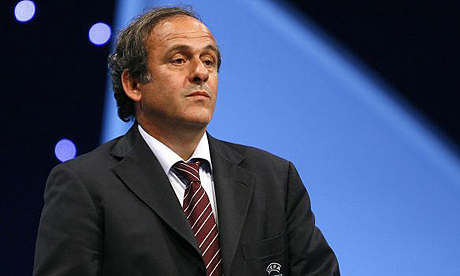
Michel Platini

Along with the TV deals issue, the UEFA Financial Fair Play regulations force the clubs to find own resources, since they would have to limit the spending on transfers and salaries to their own revenues. So some clubs, in order to keep the current salaries, will need to increase the incomes in their budgets in order to meet the limits set in the UEFA Financial Fair Play regulations.

Last summer, the voice of the threat was Karl-Heinz Rummenigge, representative of FC Bayern München and ECA's president. Rummenigge claimed that they are tied with FIFA's statues and UEFA's regulations until 2014, when the memorandum of understanding will expire. From that point, Rummenigge claimed that they may look for solutions and raised his threat: "Don't be naive. Don't think it would not be an alternative competition". When the memorandum of understanding expires, the top European clubs will no longer be legally obliged to play UEFA Champions League or release their players for international friendlies or tournaments, which puts FIFA's World Cup under threat.

Karl-Heinz Rummenigge

The reasons behind the unhappiness of ECA is what they consider the poor management of UEFA and FIFA. Platini promised them an insurance for players who are released to play the international games, but time passed and ECA did not received any call from UEFA's representatives. The relationship with FIFA is even worse, since ECA openly criticized what they consider open corruption in FIFA in the way the host countries of the next World Cups have been elected and the presidential elections. Besides, ECA have expressed their anger for the FIFA's plans to expand the amount of international games (now 11 or 12 per year), while the clubs would like to cut them down to 12 every 2 years.

Even though the complaints are agreed by all ECA members, the solutions seem to differ. In recent days, some rumours say that Silvio Berlusconi, owner of AC Milan, and Florentino Pérez, Real Madrid president, have already met Rupert Murdoch's News Corporation and Creative Artist Agency, a company participated by Peter Kenyon (former Manchester United and Chelsea FC chief executive) and Jorge Mendes (football player agent), about the possibility of creating a different organization in order to create an European Super-league and how to manage its marketing and TV rights. However, the majority of ECA still defend a solution within the current structures, but with major changes. As it happened with the creation of the English Premier League, when the English clubs created an organization out of the Football Association, the clubs may be working on an European competition managed by themselves without UEFA as intermediary but under the umbrella of the own UEFA. In one way or another, the ECA wants changes, since they consider that UEFA have gone in the wrong direction in recent years, adapting the UEFA Champions League for the entrance of clubs of smaller leagues punishing the interests of the clubs of the most important leagues and the disappearing of the 2nd group stage that assured a certain amount of games for the clubs.

Peter Kenyon

But it is also very important to take a look to the social-cultural aspects. Some defend that the structure of football need to optimize resources and the only way to do it is to have attractive games every week. Who wouldn't like to see a Manchester Utd.-Barcelona, a Real Madrid-AC Milan or a Bayern München-Internazionale every week? But others would say that the attraction of these games is that they are not played constantly, that is, the feeling of special event they have. But if they were playing each other every week, then these games will not be special events anymore. Besides, in some countries, people would still prefer to defeat the neighbor next door, the local derbies. Perhaps this idea appears in leagues that look unhealthy, like La Liga or the Serie A, while this supposed necessity does not look that obvious in the Premier League or the Bundesliga.

In one way or another, 2014 is the key year, when the memorandum of understanding will expire. Until then, the debate will continue: the Super-league in or out of UEFA, the structure of it, the relationship with FIFA, insurances and international duty for players.

PS: You can follow the blog in Twitter @almogaverblog and Facebook Almogàverblog

Friday, March 18, 2011

Sorpresivo control antidóping al Barcelona.


17.03.2011 - Estaban entrenando de rutina cuando dos emisarios de la UEFA aparecieron en la Ciudad Deportiva: usted, usted, usted, Messi, Afellay, Xavi, Villa, Jeffren, Piqué, Pinto, Iniesta, Víctor Valdés y Mascherano.

Nada extraordinario. El Barça ya había vivido una situación semejante el pasado 23 de febrero en el marco antidopaje anunciado por la UEFA.

Pero esta vez las suspicacias inundaron el ambiente porque este sorpresivo control tiene lugar horas después de ciertas insinuaciones a través de la Cadena Cope.

La movida comenzó con (más) quejas merengues. Según la COPE, el Real Madrid no entiende que haya médicos de «dudosa reputación» trabajando para el Barcelona y sí entiende que los controles antidoping son mínimos y de dudosa calidad.

De inmediato Barcelona recogió el guante y publicó un comunicado en su web oficial:

“Ante las graves insinuaciones difundidas la pasada noche por la Cadena Cope, el FC Barcelona quiere expresar públicamente su absoluta indignación por estas infundadas alusiones que vinculan al Club con prácticas de dopaje y quiere manifestar su rechazo ante actitudes que no tienen nada que ver con el juego limpio y que afectan gravemente a la imagen de la competición deportiva.

El FC Barcelona exige una rectificación inmediata y anuncia que sus servicios jurídicos ya estudian las acciones legales que deben iniciar para defender el honor del Club, de sus técnicos, jugadores y servicios médicos, objetivo por el cual está dispuesto a llegar a las últimas consecuencias.”

Así entonces, los muchachos del Barça recibieron a los de UEFA y dejaron sus recipientes llenos. “Hoy tenemos control antidoping de la UEFA.. Qué casualidad..! Moc moc! escribió Piqué en su Twitter, a lo que Carles Puyol respondió: ooooohhhhhhh!!!! Moc moc.
.

Friday, October 29, 2010

La UEFA dictamina Italia 3 Serbia 0.


29.10.2010 - Calígula - Tras la suspensión del partido de clasificación para la UEFA EURO 2012 entre Italia y Serbia que tuvo lugar en el Stadio Luigi Ferraris de Génova el 12 de octubre de 2010, el Comité de Control y Disciplina de la UEFA se ha reunido hoy en Nyon, Suiza, para evaluar el caso. Las dos federaciones nacionales involucradas en el partido (la Federación Serbia de Fútbol y la Federación Italiana de Fútbol) y el Inspector Disciplinario de la UEFA estuvieron representados en la reunión de hoy.

El Comité de Control y Disciplina ha decidido que el resultado final del partido sea un 3-0 favorable a Italia.

La Federación Serbia de Fútbol (FSS) tendrá que jugar su dos próximos partidos como local a puerta cerrada. A partir de esta sanción, un partido de suspensión queda sujeto a un periodo de observación de dos años.

El Comité de Control y Disciplina ha ordenado a la FSS que se abstenga de vender entradas a aficionados serbios para todos los partidos que su selección juegue a domicilio en lo que resta de clasificación para la UEFA EURO 2012. Además, la federación balcánica ha sido multada con 120.000 euros.

La Federación Italiana de Fútbol (FIGC) ha recibido una sanción que le obligará a jugar un partido a puerta cerrada. Esta sanción queda aplazada y sujeta a un periodo de observación de dos años. Además ha recibido una multa de 100.000 €.

Ambas federaciones tienen tres días desde el envió de la decisión por escrito para presentar sus apelaciones.
.