Showing posts with label Luis Aragonés. Show all posts

Friday, September 23, 2011

David Silva, Del Bosque and Luis Aragonés.

June 16 2010, Spain made their debut in the World Cup they ended up winning against Switzerland. The coach of the team, Vicente Del Bosque bets on a system that is similar (but not the same) to Luis Aragonés' lineups in the previous Euro 2008. But the result could not have been worse and Spain lost 0-1 against the Swiss team. There was a victim of this game: David Silva. Since then, the player of Manchester City did not count for Vicente Del Bosque, who has been calling him, but always for a very secondary role. Last week, David Silva exploded and targeted Del Bosque: "He does not trust in me". The words of someone who feels strong after the memorable games Silva is playing in the Premier League. But behind these words there is a debate that has been hidden under the success of the Spanish NT.

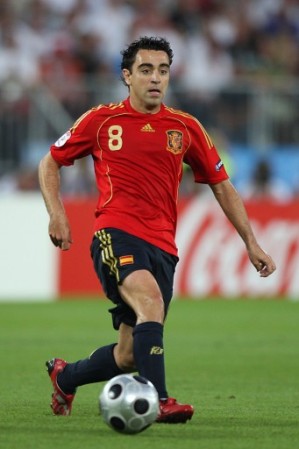
There is a remarkable difference between Luis Aragonés and Vicente Del Bosque, a difference that is not irrelevant: Silva or Xabi Alonso. After the World Cup 2006 and the failure in Northern Ireland in the qualifying round of the Euro 2008, Luis Aragonés made a bet for the rupture. Since the World Cup 1998, Spain had been walking on the shoulders of Raúl, icon of the Spanish NT and Real Madrid. Raúl defined the style. Raúl was not a classic striker, but a forward that always played with a striker along him. Since then until 2006, Spain had been using a system with two forwads, two wingers and a double midfield. However, Luis Aragonés thought that the change was needed and there was a radical change in the model and the point of gravity. The team would not turn around Raúl, but a new figure: Xavi. This change was not just a change of names, but a change of style. The huge personality of Raúl swallowed everything, while the new model around Xavi focused on the system. Xavi defines the style as long as he has partners that speak his language.
Xavi


In this idea of football, Xavi was the center and it was necessary to create the appropriate atmosphere for him. Since then, Spain basically played with a defensive midfielder (Senna), two central midfielders (Xavi and Iniesta) and two open players cutting in (Villa or Silva) plus a striker (Torres). The system admitted some changes, as in the semifinals and the final of the Euro, when Villa got injured. Then Cesc was the 12th player instead of David Villa. Using this system, Luis Aragonés took the best of the Spanish team, in terms of success and brilliance.

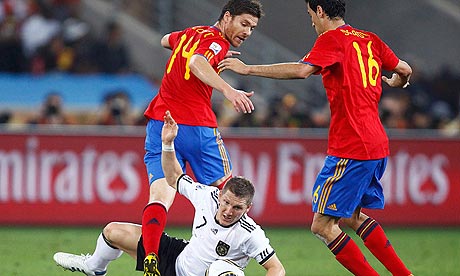
Vicente Del Bosque, during the qualifiers for the World Cup 2010 did not fix what was not broken, but the rivals were not important enough to know his intentions. Besides, some injuries, especially in the case of Iniesta, the main victim, made not possible to know his real intentions. And, in this situation, we go back to June 16 2010. Spain lose against Switzerland and Del Bosque points the guilty: David Silva. Silva disappeared from the lineups and Del Bosque made a cautious approach. The idea was the same, ball possession and attacking football.... but with the handbrake on. Del Bosque made a very strong bet on a double defensive midfield, untouchable until these days, with Sergio Busquets and Xabi Alonso. While Sergio Busquets may fit in the shoes of Marcos Senna, since both were used to play in a system with only one anchor man, the main difference was Xabi Alonso. If everything had to turn around Xavi Hernández, the Catalan midfielder lost a partner upfront to get one at his back.
Alonso & Busquets

Spain won the World Cup, showing good moments of football, but never reaching the brilliance of the Euro 2008. Since the knock-out rounds, Spain won all the games with a short 1-0. Spain was the best team, probably because they had the best players on the pitch, but the new system killed some of the beauty shown in the Euro 2008. The difference was Xabi Alonso instead of Silva. Last week, Silva talked to the media and said that "before the game against Switzerland, I had confidence. I played regularly and I had a place in the team, but everything started to change with the defeat. Because of this reason, with the pass of time, I believe I was the victim of the bad debut in the World Cup. The only thing I say is that Luis (Aragones) trust in me... Del Bosque thinks in a different way. I am going to work to keep the level I am showing in this first games, however, I doubt that I can have a protagonist role in the Euro. I feel I played in a high level and it was not enough to have a place in the starting XI. There are lots of good midfielders, not good, really good! Nothing to say about them to be chosen. I do not discuss the lineups: I analyze my situation and I am not happy. And I do not see that anything is going to change. Not playing for Barça or Madrid damages me".

Probably David Silva is right in his thoughts. The problem is not his good or bad performances, but Del Bosque's concept of football. Del Bosque sacrificed an attacking player to introduce a defensive midfielder to cover his back. Del Bosque is not Luis Aragonés, who created the circle around Xavi, nor Guardiola, who is the flag of La Masia's style. Del Bosque always trusted in the double defensive midfield, call it Makelele-Helguera or Busquets-Alonso. But, definitely, it is out of question that Del Bosque belong to a more conservative school in terms of lineup design. Del Bosque probably believes that it is better to keep the back well covered, since the talent in attack will solve the games anyway. It is logical to think that, at some point, Xavi or Iniesta will find Villa, Torres or whoever to win a game... but everything starts by keeping the order in defense. It is not that Luis Aragonés does not trust in defensive balance, he surely did, since his motto was "compete, compete, compete". But Luis Aragonés thought that the balance was assured with only one defensive midfielder... this is not possible for Del Bosque's idea.

David Silva


The consequence is that Spain waste two magnificent attacking midfielders like David Silva and Cesc Fàbregas, relegated to a secondary role, to hype Alonso and Busquets. The gravity of Spain's football is 20 meters backwards and this is not irrelevant. At the same time, Xavi will probably keep doing well, since his talent is out of question. However, when he raises his head, he will miss references that he usually has in Barcelona or used to have in Luis Aragonés' Spain. So far, both systems triumphed, but Spain's brilliance got lost in the way and the results started to walk on a thin line of 1-0's.

The debate was hidden by the success, but I am glad that David Silva put it on the table and it will mark the future of Spain. Personally, I believe it is a tragedy to punish Silva and/or Cesc in order to play with Alonso, when Busquets has shown to be capable of doing the task by himself. Why punish the attack with such a defensive and (why not) coward approach? Why? Del Bosque may win the Euro again, but I doubt Spain will find the excellence of the Euro 2008 again... and the absence of David Silva explains the difference.

Wednesday, July 27, 2011

Atlético Madrid's historical meltdown

When I was kid (and I'm not that old!), you did not hear about the 2 giants. There was a third that always counted: Atlético Madrid. Back in the 80s, the colchoneros were a power in Spain. In fact, they were the main threat for the glorious era of Real Madrid during the 60s and 70s and FC Barcelona was struggling to win a title. We are talking about the times of Luis Aragonés, Joaquín Peiró, José A. Ufarte, Adelardo, José Eulogio Garáte, Jones, Jabo Irureta, Rubén Ayala and the endless list of Atlético legends of this era. We are talking about the 4 Ligas (1966, 1970, 1973, 1977), the 4 Copas (1966, 1970, 1973, 1977). the Cup Winners' Cup (1962), the Intercontinental Cup (1974) or the European Cup final lost against Bayern (1974). The president Vicente Calderón had built the Estadio del Manzanares (later renamed with the president's name) and took the club to the highest rates of success. Atlético de Madrid was a power in Spain and had prestige in Europe. It was the golden era.

But in the 80s, an already old Vicente Calderón resigned and the club started an era of instability with several provisional presidents. The team got affected by this situation and only the return of the old president Calderón and the Copa of 1985 were the only satisfaction for the fans of the club, before the legendary president died two years later. The socios of Atlético Madrid gave Jesús Gil the presidency of the club in the elections of 1987 in, what it was the biggest historical error of this club. A poison that started to kill them slowly.

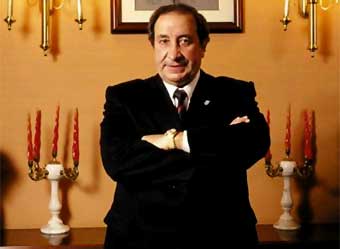
Jesús Gil was a businessman, always related with the real estate sector, who had made his fortune under the wings of the dictatorship of Franco. In fact, back in 1969, Jesús Gil was found guilty of homicide for the death of 56 people in one of the constructions he built, but the government gave him the pardon, which allowed him to escape from jail. At that time, Gil had all the money he wanted, but he knew that football could give him power, political influence and fame. Atlético Madrid was the victim of his greed, although they did not know it yet.


Using this fame, he made campaign and won the elections to be the mayor of Marbella (Málaga), a touristic town which offered a high standard of living for visitors and some famous people of Spain and other countries. It was easy to see big mansions and very expensive cars in its streets. It was the first step into politics for Jesús Gil, who wanted to use the influence of this area as a trampoline to more important political objectives. He wanted to be the Spanish Silvio Berlusconi and, definitely, he was as populist and pathetic as the Italian Prime Minister, swimming in the miseries of democracy in order to feed his political and, obviously, personal interests, breaking any line between them and the responsibility of administrating the money of the taxpayers.

At the same time, the Spanish sports law changed, forcing all the clubs with losses to become corporations. Atlético Madrid became a company in 1992, with Jesús Gil as owner. Later on, in 2004, the Supreme Court of Spain proved there was missapropriation of shares in the process to become a corporation, but the prescription of the offence was declared. At that time, it was public that Jesús Gil was always walking on a thin line.

In the sports aspect, the first years of Jesús Gil were marked by the important signings of players like Paolo Futre or Bernd Schuster, which allowed Atlético to have a short term impulse, winning 2 Copas in the early 90s (1991, 1992). At the same time, Jesús Gil was not just the owner, but a president who did not hesitate to use intervention in every single aspect. It was well-known that he forced lineups, despite his attraction to sign prestigious coaches like César Luis Menotti, Ron Atkinson, Javier Clemente, Luis Aragonés or Pacho Maturana. These interventions had as a consequence to have 3 or more coaches every season, putting the club in a state of permanent crisis and instability.


Atlético Madrid's and Jesús Gil's moment was the glorious Doblete in 1996, when the club won Liga and Copa under the direction of Radomir Antic and the talent of players like Caminero, Kiko, Penev or Pantic on the pitch, in a season of unexpected calm. It could have been a turning point and some people even thought that the president had learned the lesson... but it was just an illusion.

Justice started to haunt the activities of Jesús Gil. In 1999, the Audiencia Nacional (a court specialized in terrorism and corruption) put the club under administration. Jesús Gil was accused of embezzlement (nearly 5 million euros where moved from the City Hall of Marbella to Atlético Madrid using simulation via sponsorship and contracts with unknown African "players") and missapropriation (nearly 60 million euros disappeared from the accounting of the club), later on he was also accused of a new case of embezzlement (26 million euros disappeared from the treasury of Marbella from 1991 to 1995). The institutional chaos, with the club under the administration of justice, had a direct consequence in the team, who got relegated to Segunda División in the 1999-2000 season, where Atlético wasted 2 years of their history.


Viewing these events with some perspective of time, I believe there is a direct effect in these episodes of corruption and the meltdown of the 3rd club of Spain in terms of support. During the late 90s and the early 2000s, football enjoyed the bubble of the money of the TV rights. While Real Madrid and Barcelona had an exponential growth that allowed them to be what they are nowadays, Atlético Madrid were struggling with multiple cases of corruption and the relegation to Segunda División. In these years, Atlético Madrid missed the high-speed train of their direct rivals, looking how the money did not visit the Manzanares river.

Atlético Madrid's main asset is the support of their loyal and passionate fans, but this is not enough to go back to where they were before the explosion of the club at the end of the 20th century. Atlético Madrid still won the Europa League last year and they even played a Copa final a couple of years ago, but there is a permanent feeling of nostalgia, a sense of a rich that turned poor. Atlético always had the tradition of the pupas (cursed), but the nickname became a heavy reality that is an infection to the point that, even in the centenary anthem of the club, appears in the lyrics as a reason of pride, while I believe it is a virus that keeps the club in an eternal state of sickness, as if it was part of their DNA. Jesús Gil died in the year 2004, but this is his legacy (and his son Miguel Ángel and his good friend Enrique Cerezo are still in charge).

Nowadays, we read in the news how Kun Agüero, the icon player, wants to leave the club looking for titles and glory. Just as Fernando Torres did some years ago. Just as Diego Forlán wanted to do last summer (without success). I only see a club in ruins and constant crisis. If you had told me something like this when I was a kid, I would have never believed you.

Tuesday, July 26, 2011

Why Xavi should be the #1

Yesterday, UEFA announced the 3 nominees for their Best Player in Europe Award: Lionel Messi, Cristiano Ronaldo and Xavi Hernández, and the winner will be crowned in the UEFA Gala at the end of August, as always, in Montecarlo. Some months ago, UEFA said that "the new accolade will recognise the best player, irrespective of his nationality, playing for a football club within the territory of a UEFA member association during the previous season. For the inaugural award, players will be judged by their performances during the 2010-2011 campaing in all the competitions, both domestic and international, and at club and national team levels". The jury is formed by 53 journalists, members of the European Sports Media (EMS). Basically, this award is an answer to the FIFA World Player after they merged with France Football's Ballon D'Or and, somehow, wants to fill the space left by the award of the French magazine.

Aside the 3 nominees, UEFA announced the top-10 and there is a fact to highlight: aside Xavi and Messi, FC Barcelona have 2 other players in the top-10, Gerard Piqué and Andrés Iniesta, who was 4th in the votes. So, according to these results, 3 of the 4 best players in Europe play in Pep Guardiola's and the Spanish NT teams. These results do not differ much from the last FIFA World Player Award, which suggests some consensus about the domination of the mentioned teams in their respective tournaments.

Out of the pure facts, I must admit that I am not a big fan of these individual awards. In fact, I believe they are unfair and somehow silly, since I believe football is a collective game, a team game, where the synergies are more important than the pure sum of individuals. Of course, individual talent is important, but it only excels when the collective functioning works as a perfect machine, where the connections, the associations, the flow of a system allows the players to express their natural talent inside the rules and discipline of a system.


Is Xavi better than Messi and Ronaldo? First of all, I believe it is not possible to compare. Lionel Messi and Cristiano Ronaldo probably represent the image of football, they are the best commercial of the game, outstanding players who make the difference when and where it matters. Both are a joy to watch, each one in their own style. No one is going to discover their talent at this point and, of course, if they win any personal award, I would have nothing to say about it. Xavi is not in charge of the electric chair as the other two, his style is more subtle, or just different, impossible to compare.

So why Xavi? Despite I know that these awards are a recognition for the contribution of a particular player in a particular season, I also believe that it is necessary to take some distance and analyze the overall moment. It is evident that Xavi can not compete with the other 2 in terms of goals, highlights or these particular moments that, at the end, are the aspects which make this game be different and attractive. On the other hand, before the goals and the highlights, there is a team, in FC Barcelona, Real Madrid or any other team you can think about. A team that, with their collective performance allows the executioners to excel in what they do.

Looking at the last years, the most successful club has been FC Barcelona. A success based on a certain and maybe unique style of football, which has attracted the attention of the World. At the same time, the Spanish NT won the Euro 2008 and the World Cup 2010, with a different system, but the same idea of football. Basically, we are talking about the most successful teams of their era, in the club and international level respectively. All these teams have something in common: Xavi Hernández.


History will say that, in this era of football, there was a dominant style and, in my opinion, the icon of the style is Xavi. The Catalan player is the engine, the brain and the soul of the teams he plays in. Xavi and his way to view football define the idea of his teams: Barcelona and the Spanish NT. Without Xavi, it would be impossible to understand the success of the dominant teams of this era. Pep Guardiola is not Luis Aragonés and none of them is Vicente Del Bosque and vice versa. The system changes, the mechanisms are different, but the philosophy is the same and the whole idea is built around Xavi.

As extraordinary as they are, Lionel Messi and Cristiano Ronaldo do not define a style, they do not change the teams they are in. They are the best in what they do. They make the difference and they would do it anywhere they would go, but none of them have the influence to change the style. Put it this way, Barcelona and Spain would not be what they are without Xavi. They might be as good as they are nowadays, they might win everything too, but they would be different. Xavi is the key of the idea, everything flows around him, the teams where he plays in build their overall mechanisms and automatic movements around the game of Xavi. If intelligent and patient ball possession is successful, it is because there is a player called Xavi, who reads the game as no one else does nowadays, always choosing the best option, giving the ball backwards instead of losing it or risking an impossible pass, accelerating the pace of the game with a killing assist that breaks 2 defensive lines, but always with an idea in mind: "if the ball is yours, the rival does not have it", which is an idea that breaks the supposed defense and attack border to become an overall idea of football. If the ball is yours, you can score the goals you need... and if the ball is yours, the rival does not have the ball they need to score a goal against you.

Maybe these awards will never recognize the individual achievement of this player, but I believe history will put this Barcelona and this Spanish NT in their right place and Xavi will always be recalled as the architect of their idea of football. I do not believe in personal awards, but I believe in recognition where its due. This is why I believe Xavi should be the #1.